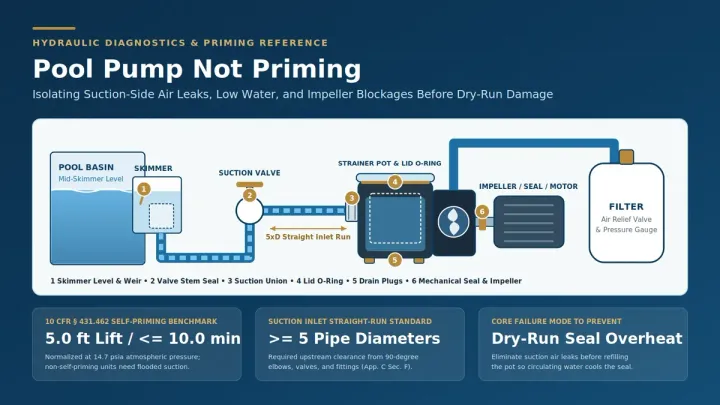
pool equipment
Pool Pump Not Priming: Air Leaks & Fixes
Isolate suction-side air leaks, low skimmer water, and impeller clogs before refilling the strainer pot so your pool pump primes and protects its shaft seal.
Topic hub
Swimming pool circulation, filtration, sanitization, heating and automation guides explaining how the system works and how to size and specify each component.
Pool equipment works as one hydraulic and control system: skimmers and drains feed a pump, which drives water through filtration, heating and sanitization before returning it to the pool. Changing one component without checking flow, head and the others usually moves the problem downstream. These guides explain each stage and how the components must be sized together.
Read the system overview first, then pump sizing and filter types compared.
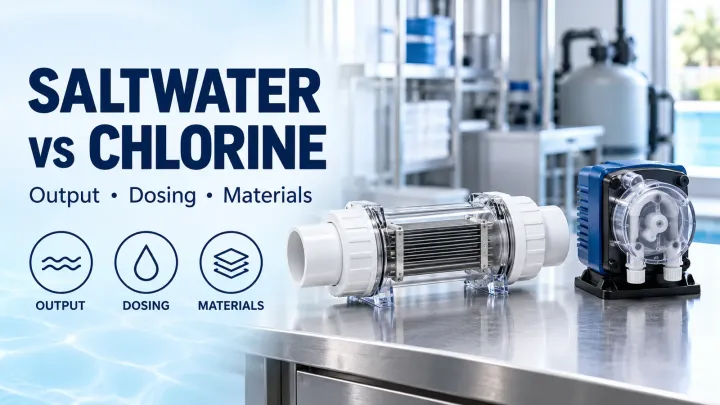
For disinfection, compare saltwater vs chlorine equipment by usable chlorine output, dosing controls and heater or rail compatibility.
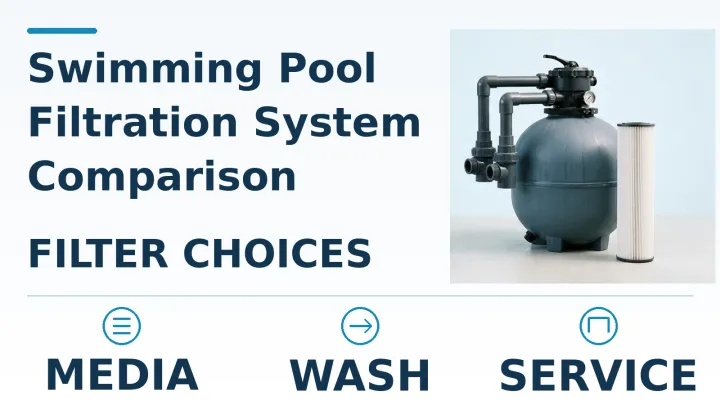
Compare nominal capture, media area and cleaning-water demand in the swimming pool filtration system comparison.
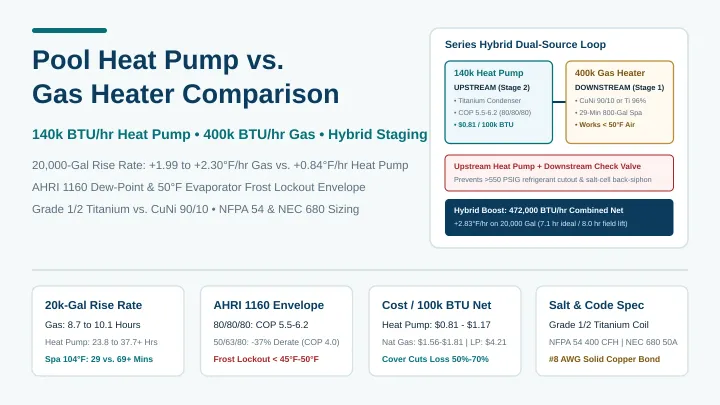
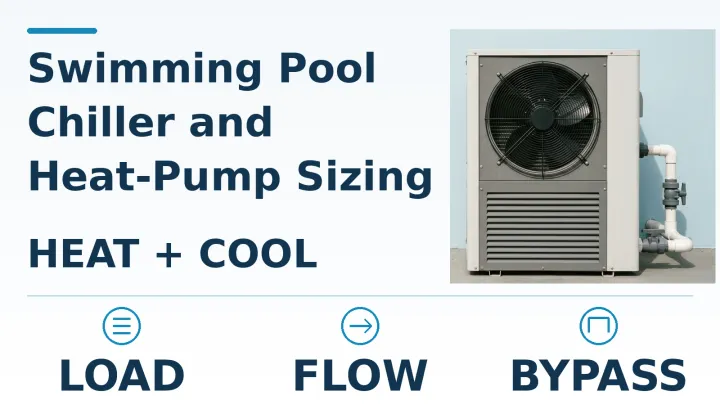
For temperature control, use swimming pool chiller and heat-pump sizing to separate summer heat gain, recovery duty and bypass flow, and compare cold-start recovery rates, AHRI 1160 dew-point lockouts, cost per 100,000 BTU, and series hybrid staging in our pool heat pump vs gas heater comparison.
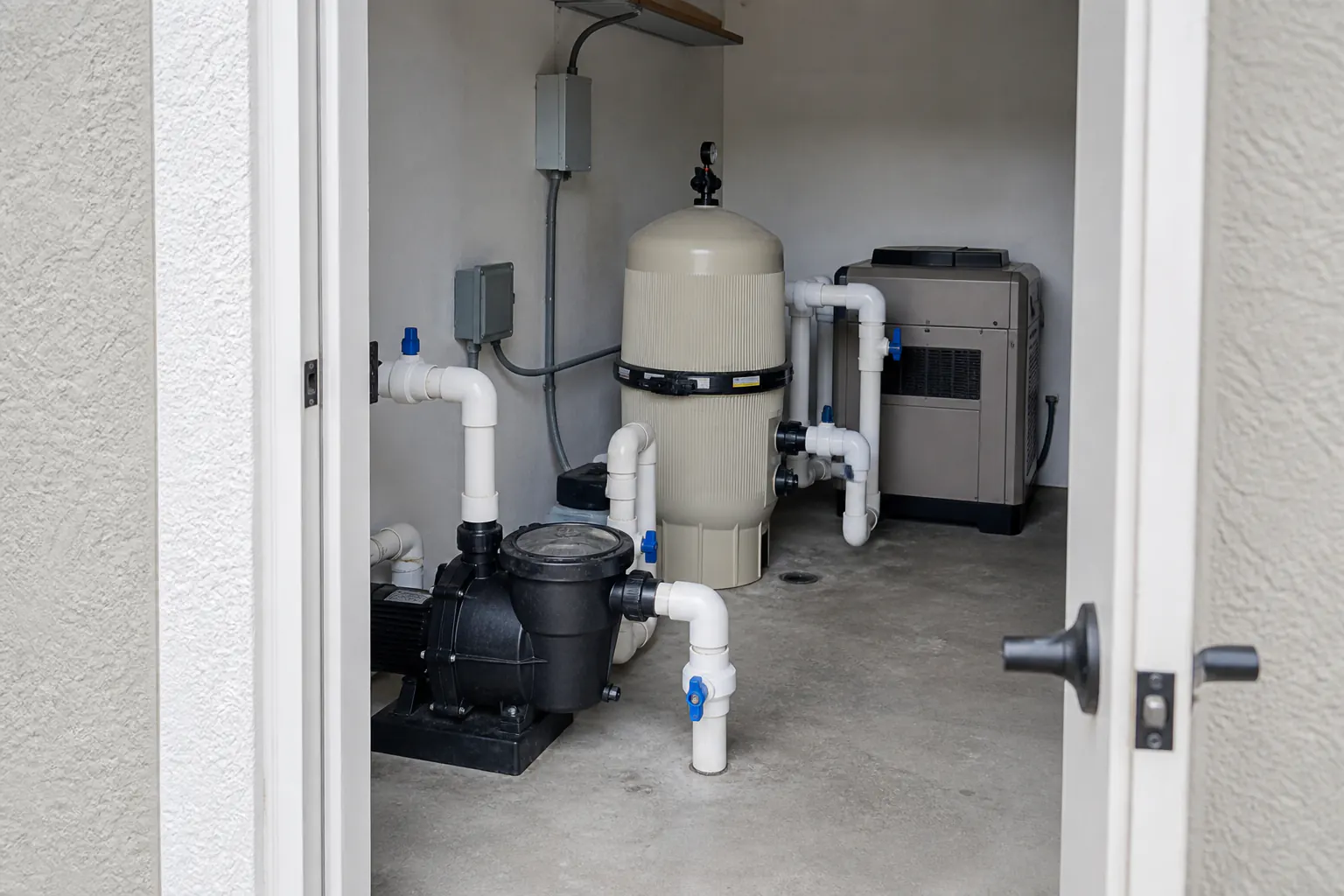
The equipment package checklist is the document you send with drawings.
A pump selected from a “this horsepower fits this pool size” table ignores pipe length, elevation and fittings. Size against the hydraulic circuit. Match the filter to the flow you actually intend to run, including a lower overnight speed if the pump is variable-speed. Once that design flow exists, the variable-speed flow rate guide puts it next to the published program window and the factory 30 GPM, 24-hour schedule.
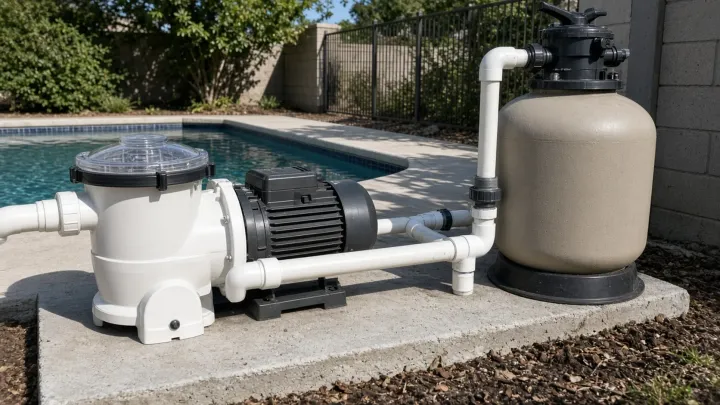
When an existing pump runs dry or loses vacuum after shutoff, work through pool pump not priming diagnostics to isolate suction-side air leaks, low skimmer water, and impeller clogs before restarting.
A salt chlorine generator is a separate check from that pump. The salt cell sizing and runtime checklist lines up the published pounds per 24 hours, the hours the cell can chlorinate, and the output percent.
For hot or dusty sites, compare the proposed pump motor and controls location with each offered model’s documented ambient-temperature and ventilation limits. Ask the supplier whether derating or a different installation is needed; use the hot-climate site brief. For the room that houses the package, use equipment room design. Attach the package list to the RFQ template so quotes stay comparable.
Isolate suction-side air leaks, low skimmer water, and impeller clogs before refilling the strainer pot so your pool pump primes and protects its shaft seal.
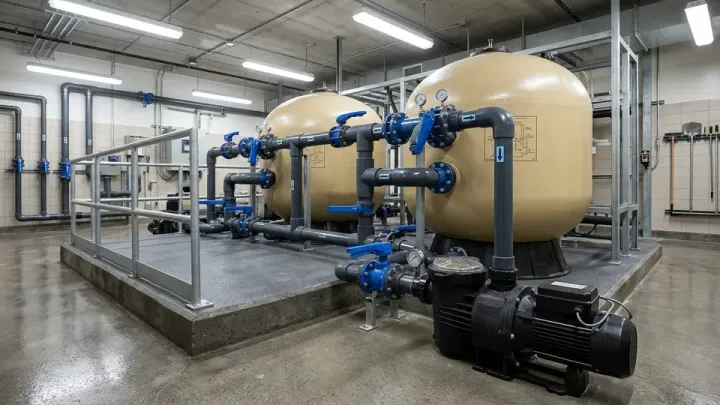
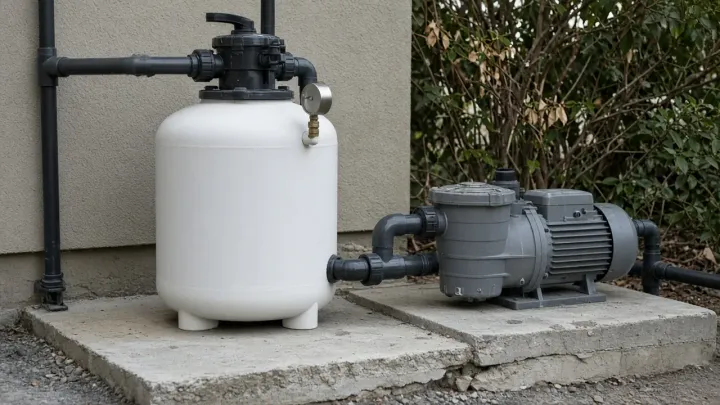
Verify commercial pool sand filter surface area, silica media bed depth, pump manifold flow, backwash bed expansion, water viscosity, and waste pipe sizing.
Compare saltwater chlorine generation with liquid dosing by chlorine output, operating hours, controls, cell scale and heater or rail compatibility.
Compare a 140k BTU pool heat pump and 400k BTU gas heater across 20,000-gallon temperature rise rates, AHRI 1160 dew-point limits, cost per 100k BTU, and titanium metallurgy.
IntelliFlo3 programs 20 to 140 GPM on the 3 HP model. Turn the default 30 GPM schedule into hours for a stated pool volume before you raise the flow.
Size a pool chiller from summer heat gain and pull-down time, check winter heat-pump duty separately, and verify the bypass and heat-exchanger flow.
Compare sand, DE and cartridge pool filtration by nominal capture, design filtration rate, cleaning water and failure prevention at the same flow.
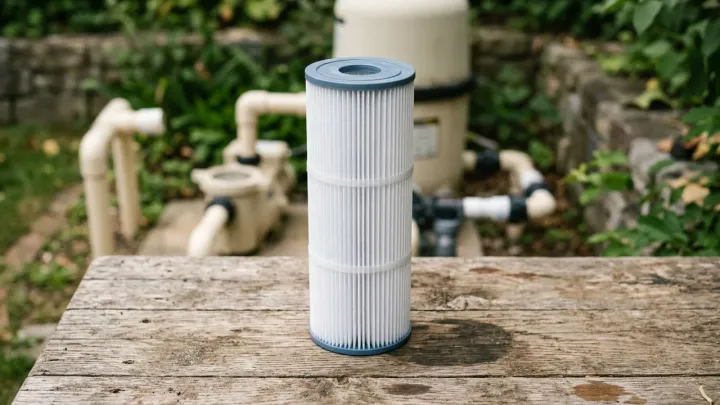
Identify Pentair pool filter cartridges by CC, RP or Plus series, parts-document version and element quantity before ordering.
A reading from another pump speed is not a baseline. Record clean pressure and rpm, then apply this Clean & Clear RP guide's 8-10 psi rise.