

pool renovation
Pool Renovation Planning Guide
How to scope a pool renovation; condition assessment, deciding what to replace, sequencing surface and equipment work, and coordinating retrofit additions.
Topic hub
Guides for renovating existing pools and upgrading equipment, including scope planning, plumbing retrofits, resurfacing coordination and adding new systems to old pools.
Renovation projects work within the constraints of an existing shell, deck and plumbing network. The cheapest quote is often the one that ignored those constraints. These guides cover scoping a renovation, sequencing trades, upgrading equipment and retrofitting systems such as automatic covers and automation.
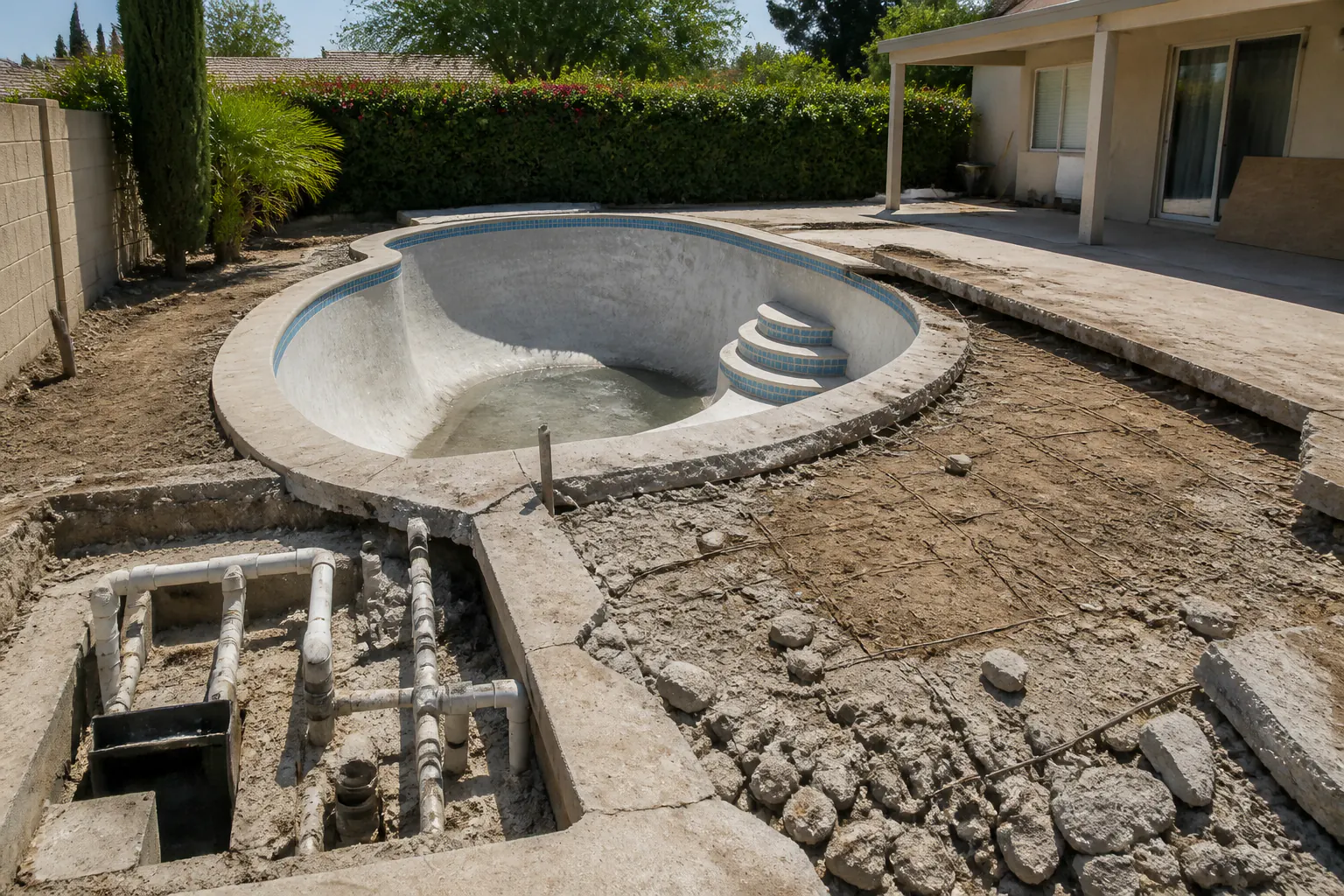
Open the quote only after you know what you are keeping. A useful survey records:
Resurfacing, retiling and coping replacement look like finish work. They are also the moment when a cover track, new returns or a widened bond beam can be added at a fraction of a later retrofit. If a cover is even a maybe, decide the track type before the deck is closed. Read new pool versus retrofit cover and undertrack versus toptrack.
A renovation fails when the plasterer, tiler, plumber, electrician and cover installer each assume someone else left space. Write a sequence that names who owns the drained period, who owns water tightness, and who is allowed to cut the deck. Typical order:
Do not size a new pump against a catalog “horsepower for this pool size” row. The existing pipe run, fittings and elevation set the head. A larger pump on undersized suction can cavitate. Follow the system overview and pump sizing so a replacement is matched to the hydraulic circuit you actually have.
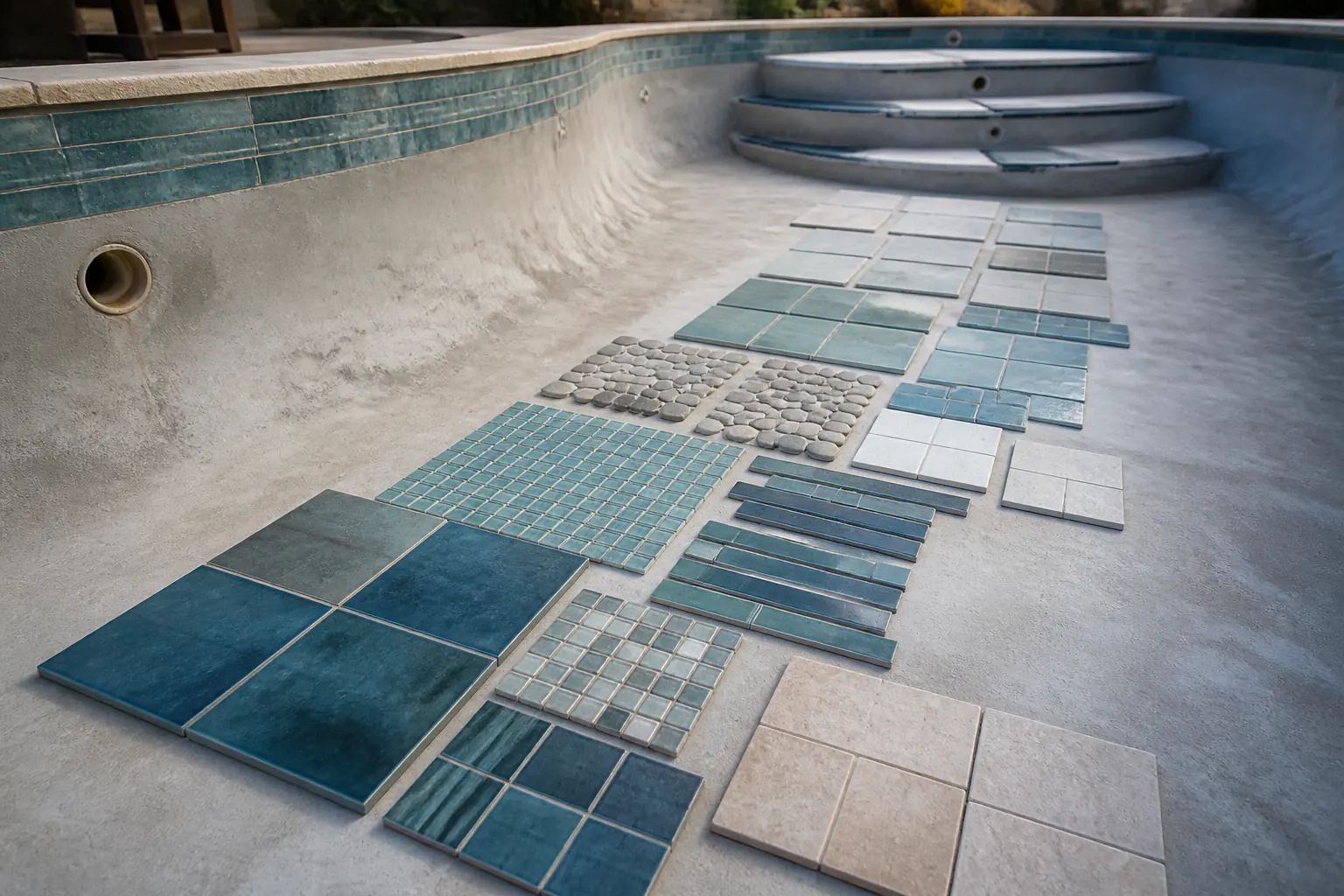
Older residential plants often have a single-speed pump, a filter that was never matched to the flow, and no documented turnover target. A renovation is the time to ask whether variable-speed operation, a different filter media, a heater or heat pump, and automation will fit the pad and the electrical service. The equipment package checklist keeps those items on one page so the electrician and the equipment bidder are looking at the same list.
Safety items belong in the same scope conversation: drain covers, barriers, and whether a cover is specified as a safety cover under ASTM F1346 or only as a debris cover. Those are different products and different claims.
Use the renovation planning guide to set scope before you open a quote. If the project is closer to a new brief than a repair, switch to the new pool planning checklist so you do not inherit an incomplete drawing set.
Budget the drained period as a project, not a weekend. Plaster cure, inspection holds and cover commissioning all consume calendar days. A quote that promises “back in water on Friday” without naming those holds is incomplete. Write the water-off and water-on dates into the contract, and name who owns chemistry during the first week after refill. If neighbors share a wall or an easement, add access notices to the same schedule so a late coping delivery does not idle every other trade.
These pages help you ask better questions of the designer and contractor. They do not replace a structural inspection, a leak-detection survey or a licensed installer.
How to scope a pool renovation; condition assessment, deciding what to replace, sequencing surface and equipment work, and coordinating retrofit additions.