Direct answer
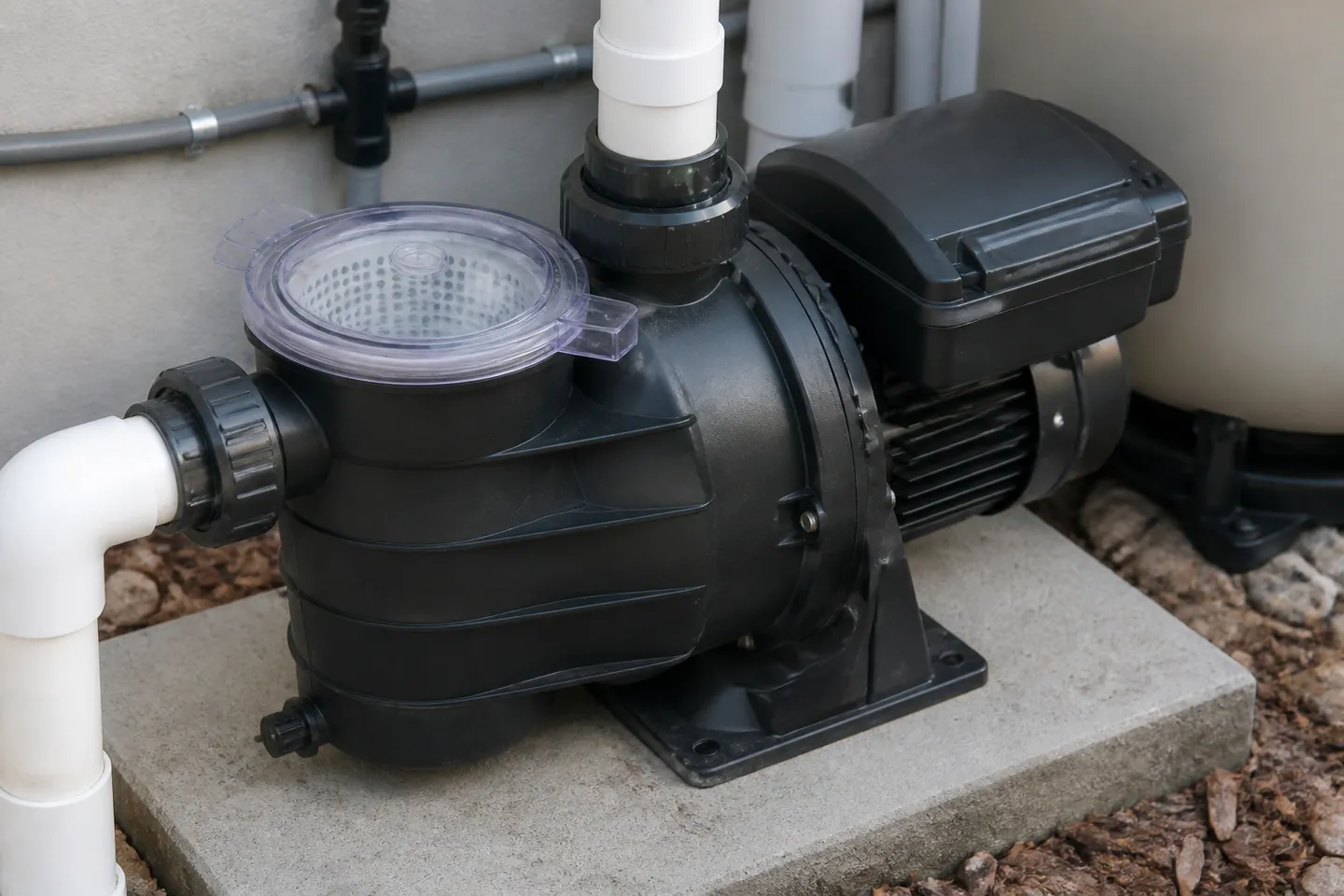
Size a pool pump from the required design flow and the system's total dynamic head, then select a model whose published curve reaches that operating point. A variable-speed pump can run daily filtration at lower speeds while retaining capacity for higher-flow functions.
Key takeaways
- Design flow = pool volume ÷ turnover time; that number, not habit, sizes the pump.
- Total dynamic head (pipe, fittings, filter and heater resistance) decides where the pump actually operates on its curve.
- Oversizing is the most common sizing error and costs energy every hour the pump runs.
- Variable-speed pumps can reduce energy use by matching speed and runtime to each operating task.
Pump horsepower alone does not tell you whether a pump fits the system. A useful selection starts with three values: pool volume, required flow and total dynamic head.
Step 1: Design flow rate
Divide pool volume by the turnover target.
- 60 m³ pool, 10-hour turnover → 6 m³/h design flow.
- In U.S. units: 15,000 gallons over 10 hours → 25 gpm.
Turnover targets come from the applicable code and the designer’s operating basis. Volume comes from the pool drawings or a measured calculation.
Step 2: Total dynamic head
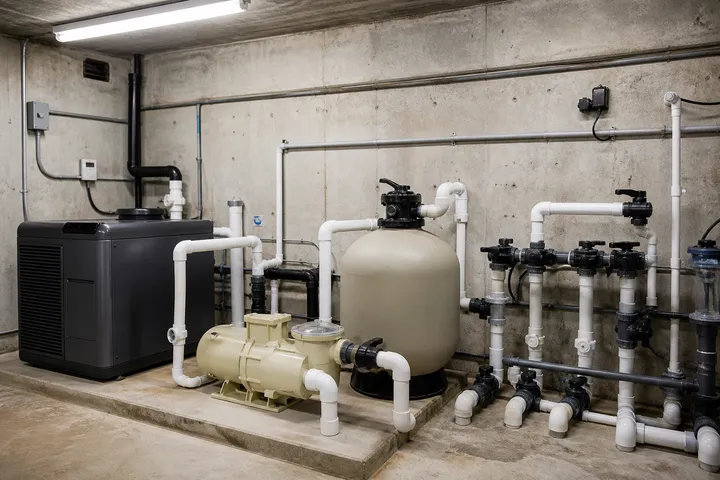
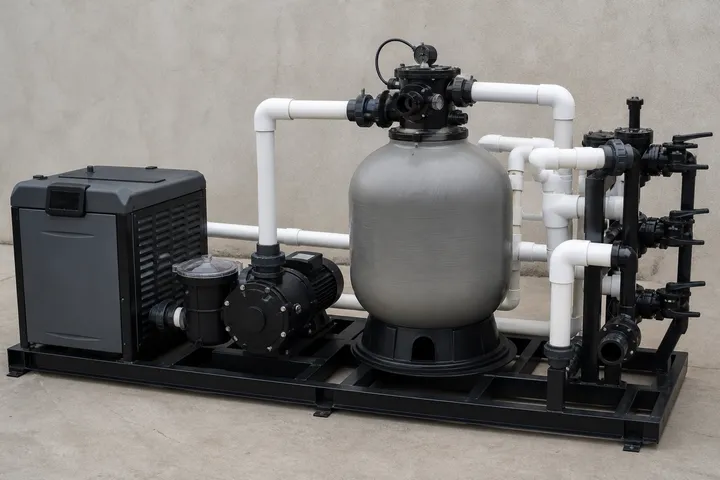
Head is the resistance the pump must overcome: pipe friction, elbows and fittings, the filter, the heater and any water features. Long, undersized suction lines are the usual offender. On new projects, head can be estimated from the plumbing layout; generous pipe diameters planned in the equipment room design stage buy quieter, cheaper operation for the system’s whole life.
Build the estimate from the proposed route instead of applying one generic head value to every pool. Record the length and diameter of each important pipe segment, fittings, elevation conditions that affect the selected circuit, and the published resistance of the filter, heater, valves and other in-line equipment. Identify whether the estimate represents a clean filter or the intended service condition.
For an existing pool, drawings may be incomplete. Use available pressure and vacuum readings, observed pipe sizes and field measurements to develop the operating picture. Treat the result as an estimate and keep the uncertainty visible when comparing pump curves.
Step 3: Read the pump curve
Manufacturers publish curves of flow against head. Select the pump whose curve passes through your design point (design flow at estimated head) near its efficient region. A pump chosen without the head estimate will operate somewhere else on its curve than the catalog number that sold it.
Do not compare models at free-flow capacity or by horsepower alone. Use the curve for the exact model, speed and electrical configuration being offered. Also check the filter, heater and treatment equipment at that same flow. A pump that reaches the design point can still be unsuitable if another component’s permitted range is exceeded.
If the head estimate is a range, plot both ends. The useful choice should cover the expected operating points without forcing routine filtration to run at the top of the pump’s available range.
Why oversizing fails
| Consequence | Mechanism |
|---|---|
| Higher energy cost | Pump power rises steeply with flow; excess flow is pure waste |
| Worse filtration | Flow above the filter’s design flux reduces capture efficiency |
| Noise and wear | Higher velocities in pipes and fittings |
| Short cycling | Automation compensates by running less, hurting turnover distribution |
The variable-speed exception
Variable-speed pumps let operators separate daily filtration from short periods of higher demand. Lower-speed operation can reduce energy use substantially, but savings depend on the hydraulic system, schedule and control settings. The pump must still reach the required operating points for cleaning, heating, water features or spa functions. Use the manufacturer’s curves and ENERGY STAR performance data when comparing models.
Create an operating-point schedule rather than one speed setting:
| Function | Flow or performance input to record |
|---|---|
| Daily filtration | Required circulation flow and daily operating time |
| Heating | Heater minimum and maximum flow plus the heating schedule |
| Cleaner | Cleaner or cleaning-circuit requirement |
| Water feature | Feature flow and whether filtration runs at the same time |
| Spa | Jet, heating and filtration requirements for spa mode |
The schedule lets the controls contractor program named modes and gives the operator a reason for each setting. It also exposes combinations that cannot run together without exceeding the available flow or equipment limits.
Commercial note
Commercial pools size pumps to code-mandated turnover with redundancy (duty/standby pairs) and must hold flow as filters load. That planning context is part of the hotel and resort pool planning guide.
Putting it in the package
Record the design flow, head estimate and selected operating point in the equipment schedule so the filter and pipe sizing stay consistent; the system-level picture is in the pool equipment system overview, and quotation-ready documentation is covered in the pool equipment RFQ guide.
Ask each bidder for the exact pump curve with the proposed operating points marked, electrical data, connection sizes, control compatibility and the manufacturer’s performance information used in the selection. A statement that a pump is “suitable for the pool size” is not enough to reproduce or review the calculation.
Verify the installed operating point
Commissioning closes the gap between the paper estimate and the built system. Confirm the installed pipe and equipment arrangement, establish clean strainer and filter conditions, then record the pump speed, indicated flow where a flow meter is installed, and available pressure or vacuum readings. Test each programmed mode and confirm that heater, treatment and other equipment remain within their published operating limits.
Keep those initial readings with the operating schedule. They provide a baseline for diagnosing a blocked strainer, loading filter, changed valve position or altered speed later. If measured behavior differs materially from the design estimate, correct the cause or update the operating plan before treating the original setting as final.
Frequently asked questions
What turnover time should a residential pool target?
There is no universal residential turnover time. Use the applicable local code, designer's basis of design and sanitation strategy. Public pools usually have code-defined turnover requirements that vary by venue type and jurisdiction.
Why does an oversized pump hurt the filter?
Excess flow can exceed the filter manufacturer's rated flow, increase system pressure and raise energy use. Select the pump and filter against the same design point.
Sources
- Pool Pumps — ENERGY STAR Accessed August 23, 2026.
- Variable Speed Pool Pumps Comparison Reference Guide — Pentair Accessed August 23, 2026.
- Dedicated Purpose Pool Pumps — U.S. Department of Energy Accessed August 23, 2026.