Direct answer
In hot, dry and dusty climates, size the circulation system for higher evaporation and debris load, protect motors and electronics from heat and grit, choose sanitization that stays stable in strong sun, and treat an automatic cover as part of the equipment package because it cuts the load on every other component.
Key takeaways
- Evaporation and dust can raise water loss and filter loading; compare cover use and additional filter area against the site's conditions.
- Equipment rooms need shade, ventilation, drainage and sealed enclosures, not just floor area.
- Variable-speed pumps help because they can run longer, quieter filtration cycles without oversizing a single-speed motor.
- Specify UV-stable plastics, accessible filters and a realistic spare-parts list for sand, seals and sanitizer cells.
Hot, dry and dusty regions change the operating conditions around the equipment system. Evaporation affects water use, grit reaches strainers and filters, and outdoor equipment sits in higher ambient temperatures. Those conditions belong in the design brief and supplier quotation.
What the climate attacks
| Stress | Effect on the plant | Specification response |
|---|---|---|
| High evaporation | Heat and water loss, unstable chemistry | Cover the pool; size make-up and sanitizer for the uncovered hours |
| Dust and sand | Rapid filter loading, scored seals | Generous filter area, cleanable strainers, sealed enclosures |
| Ambient heat | Motor and electronics stress | Shade, ventilation, hydraulic cover drives on large systems |
| Strong sun | UV aging of lids, wiring and fabric | UV-stable materials and covered cable routes |
| Hard water / high TDS | Scale on heaters and salt cells | Accessible heat exchangers and a service plan |
EPA WaterSense guidance identifies evaporation as a major source of water loss and describes pool covers as a conservation measure. Record any cover for a hot-climate pool in the operating basis because it affects heat and water-loss assumptions.
Write a site brief before selecting products
Do not use “hot climate” as the whole specification. Give bidders the site information they need to check their products:
| Site input | What to record |
|---|---|
| Equipment location | Indoor room, ventilated enclosure or outdoor pad |
| Sun and weather exposure | Areas in direct sun, roof or shade provision, windblown dust and irrigation |
| Water information | Available analysis, known scaling history and make-up source |
| Pool operation | Seasonal or year-round use, intended water temperature and cover use |
| Service conditions | Access hours, wash-down limits and space for cleaning filters or coils |
| Electrical supply | Voltage, frequency, phase and panel location |
Ask the supplier to identify any proposed item that falls outside its documented environmental or electrical limits. The answer should be tied to the offered model, not a general statement about the brand.
Component notes
- Pump: prefer a variable-speed unit sized to the real design flow and head, then run long, slow filtration hours. Oversizing a single-speed pump adds heat in the room and noise on the deck.
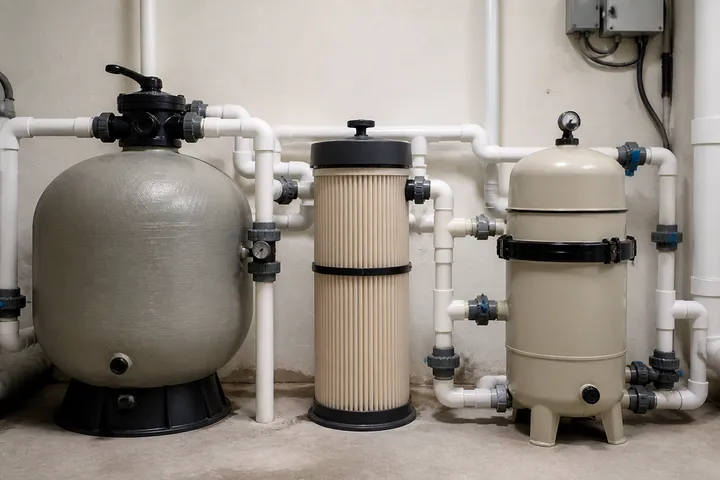
- Filter: dust makes area more important than brand. Compare types in pool filter types compared and keep a spare media or cartridge set on the project.
- Sanitization: sunlight destroys free chlorine faster; outdoor pools need either more robust residual control, a cover during unused hours, or a supplementary oxidizer strategy agreed with the designer.
- Heating and cooling: some hot-climate pools need heat only in the shoulder season and shade or night covering in peak summer. Do not size a heater as if the pool were in a cool maritime climate.
- Automation: put panels in a ventilated, dust-managed enclosure. Alarms matter more when chemistry swings faster.
Plant-room detailing
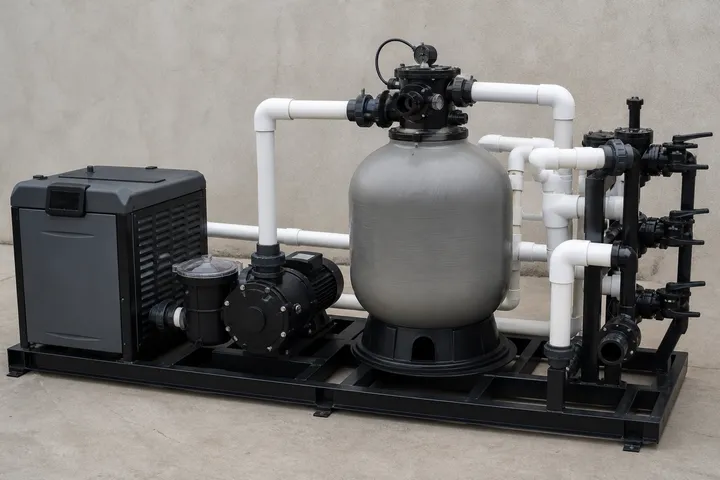
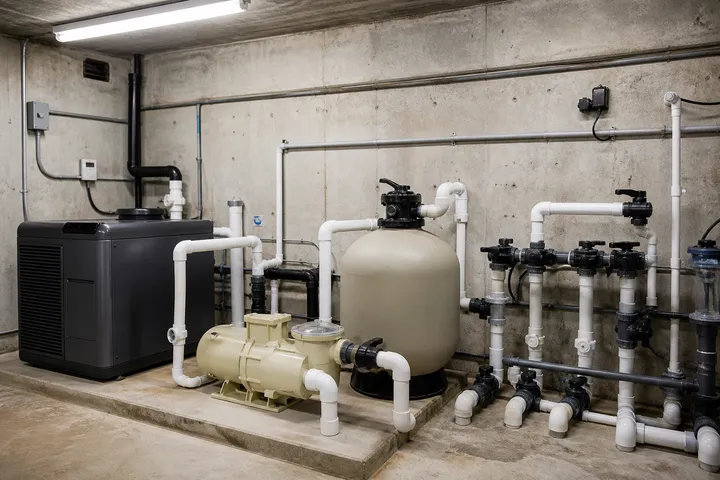
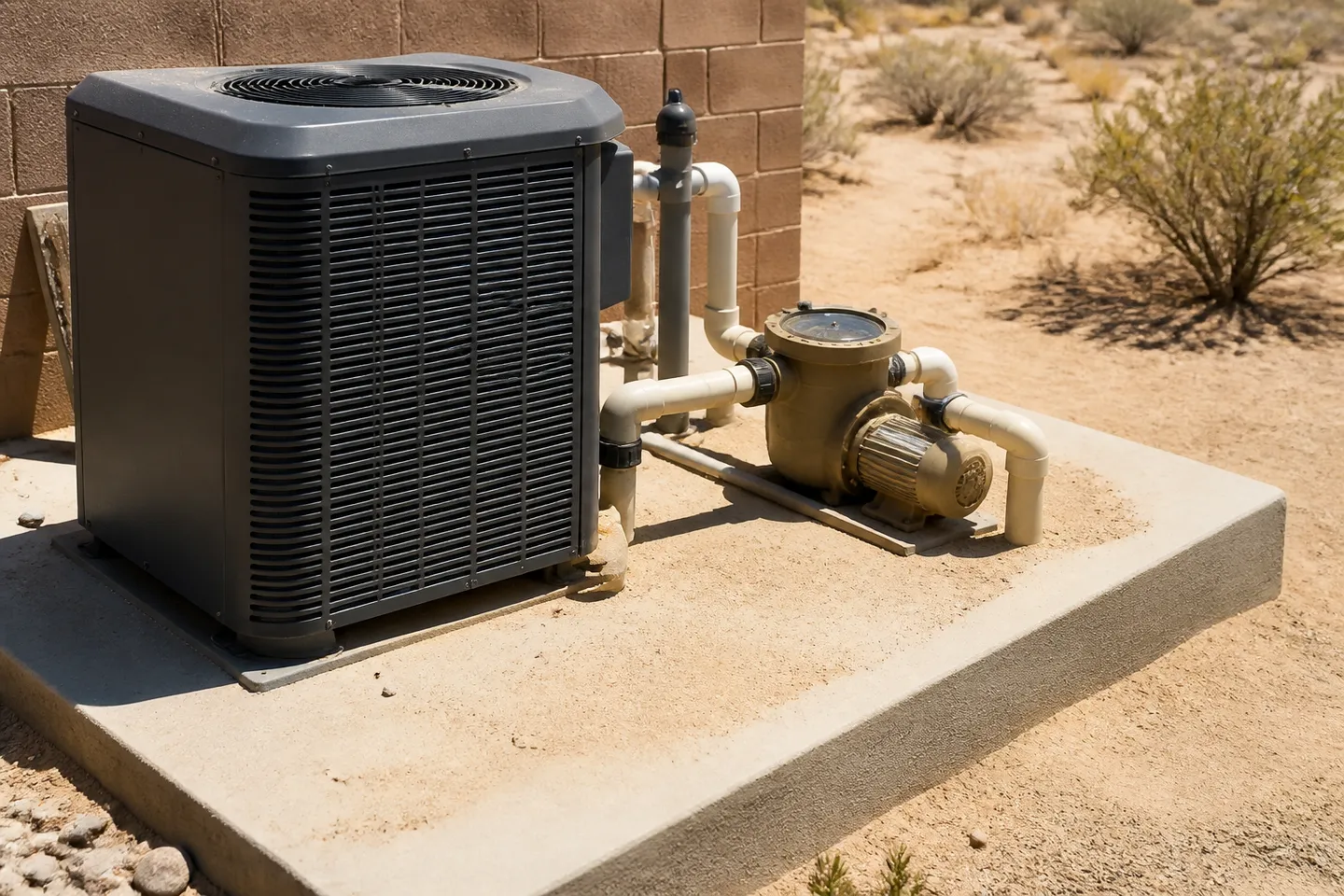
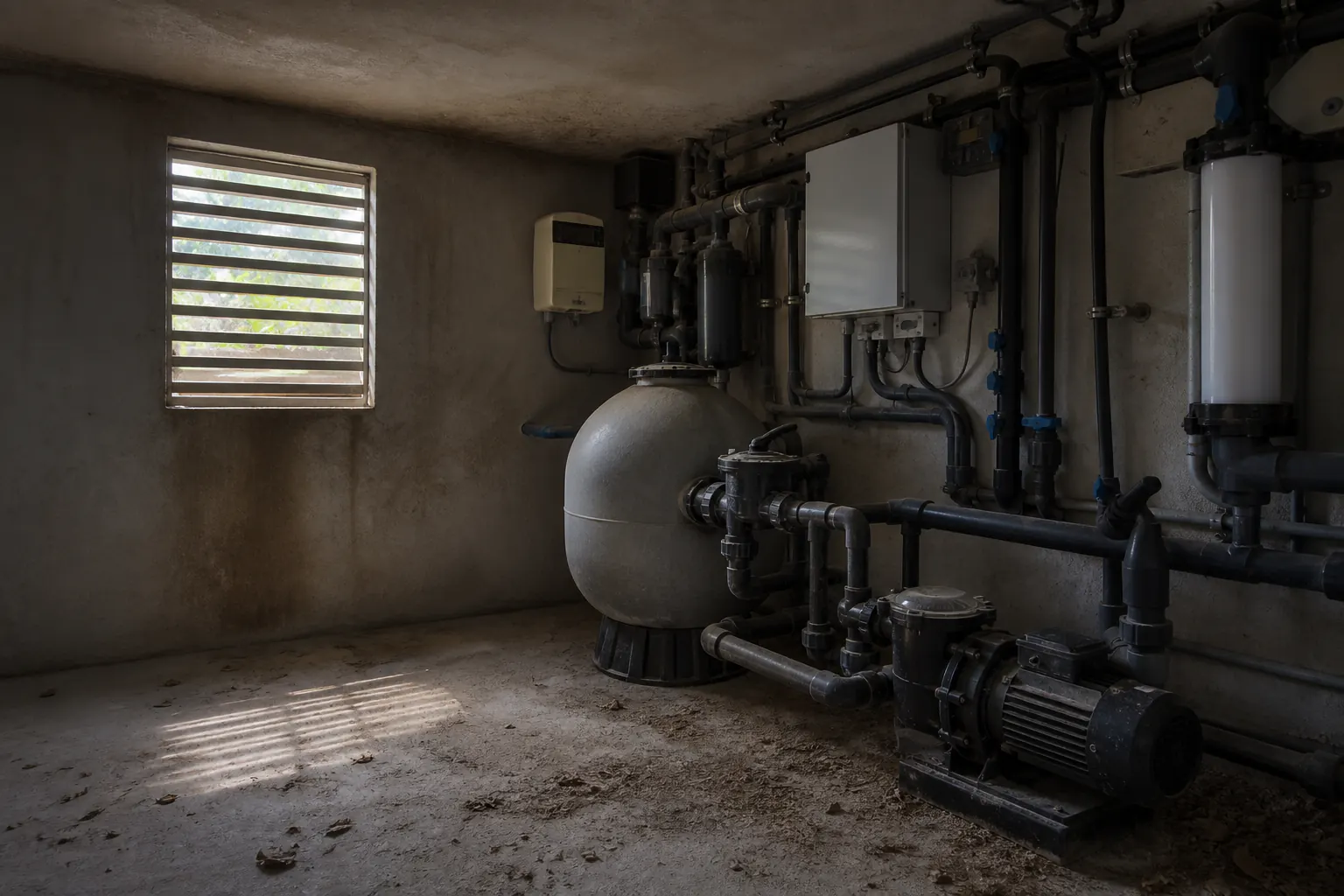
The equipment room is an environmental control problem in this climate: shade the roof, move air, drain the floor, and keep chemicals isolated. Outdoor skid plants need coil clearance, wash-down access and a place for covers to keep grit out of fans.
Hotel and resort plants in the same climates add duty-cycle and uptime rules from the hotel pool planning guide.
Place controls where operators can read and service them without standing in water or direct spray. Keep filter lids, pump strainers and heater panels accessible after the pipework is installed. Shade is useful only if it does not block the airflow or clearance required by the equipment manual.
Plan routine inspection around the site
A maintenance record should include strainer condition, filter pressure, visible scale, enclosure cleanliness and any alarm or control change. The equipment manuals and actual dust load should set the frequency. A fixed calendar copied from another site may be too frequent in one season and too slow in another.
Record clean-condition readings at commissioning. Later readings then have a site baseline rather than a catalog assumption. If the operator changes pump speeds, cover use or cleaning intervals, note the reason and the resulting readings.
Specification checklist
Record ambient design temperature, dust exposure, water analysis, cover decision, filter area, motor enclosure ratings and a spare-parts list on the equipment package checklist. Send that package with the RFQ.
When quotations return, compare exclusions as well as product names. Ventilation, shade structures, drain connections, spare filters and protective enclosures may sit outside the equipment price. Assign each item to a trade before treating the package as complete.
Frequently asked questions
Do hot-climate pools always need a larger pump?
Not automatically. They often need more filtration area, better covers and longer low-speed run hours. A larger single-speed pump can make heat and noise worse if the pipework and filter cannot take the extra flow.
Should outdoor equipment sit in full sun?
Avoid it when the site allows. Direct sun raises enclosure temperatures, shortens capacitor and electronics life, and makes heat-pump coils work harder. Shade, airflow and service access belong on the layout drawing.
Sources
- WaterSense at Work, Commercial Pool and Spa Equipment — U.S. Environmental Protection Agency Accessed August 23, 2026.
- Pool Pumps — ENERGY STAR Accessed August 23, 2026.
- Model Aquatic Health Code — U.S. Centers for Disease Control and Prevention Accessed August 23, 2026.