
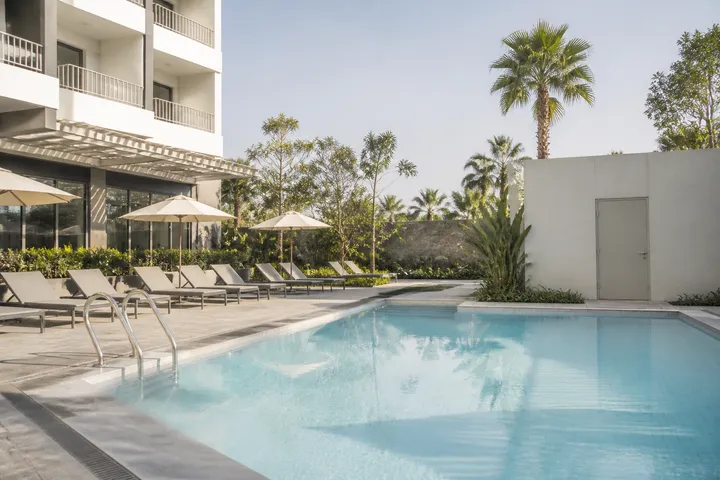
commercial pools
Hotel and Resort Pool Planning Guide
Planning guidance for hotel and resort pools; code-driven turnover, plant room redundancy, bather load, maintenance access, covers and handover documentation.
Topic hub
Planning guides for hotel, resort, community and commercial swimming pools, covering plant rooms, equipment redundancy, bather load, maintenance access and handover.
Commercial pools run longer hours, carry higher bather loads and tolerate less downtime than residential pools. A closed hotel or apartment pool is a visible service failure. These guides cover planning decisions specific to hotels, resorts, apartment communities and other commercial operators: turnover, redundancy, plant access, guest circulation and handover.

Residential sizing habits do not transfer. Public and semi-public pools are classified by the health authority, and the class drives turnover, treatment, supervision and monitoring. The CDC Model Aquatic Health Code is a reference many jurisdictions adapt; it is not a substitute for the adopted local code. Identify the reviewing authority, the edition in force and the pool type (swimming pool, spa, wading pool, activity pool) before anyone sizes a pump.
Bather load is an operations number as well as a design number. Peak occupancy, splash features and shallow water all raise the contaminant load. A plant that meets the turnover number on paper can still fail if the surge capacity, strainer access or chemical storage cannot support a Saturday in season.
Uptime is the business case. One pump, one filter and one heater may look cheaper in the bid. A single failed seal or clogged strainer then closes the water. Duty and standby pairs, isolation valves and a documented changeover procedure cost less than a day of refunds and reviews.
The plant has to be serviceable without walking tools or chemicals through the lobby. Plan:
Outdoor resort pools often stay uncovered during operating hours. Where the pool has defined closing hours, a cover can cut overnight evaporation and debris. Payback depends on climate, energy prices and whether night staff will actually close it. See equipment for hot climates and pool covers for hot climates when the site is hot, dusty or both.
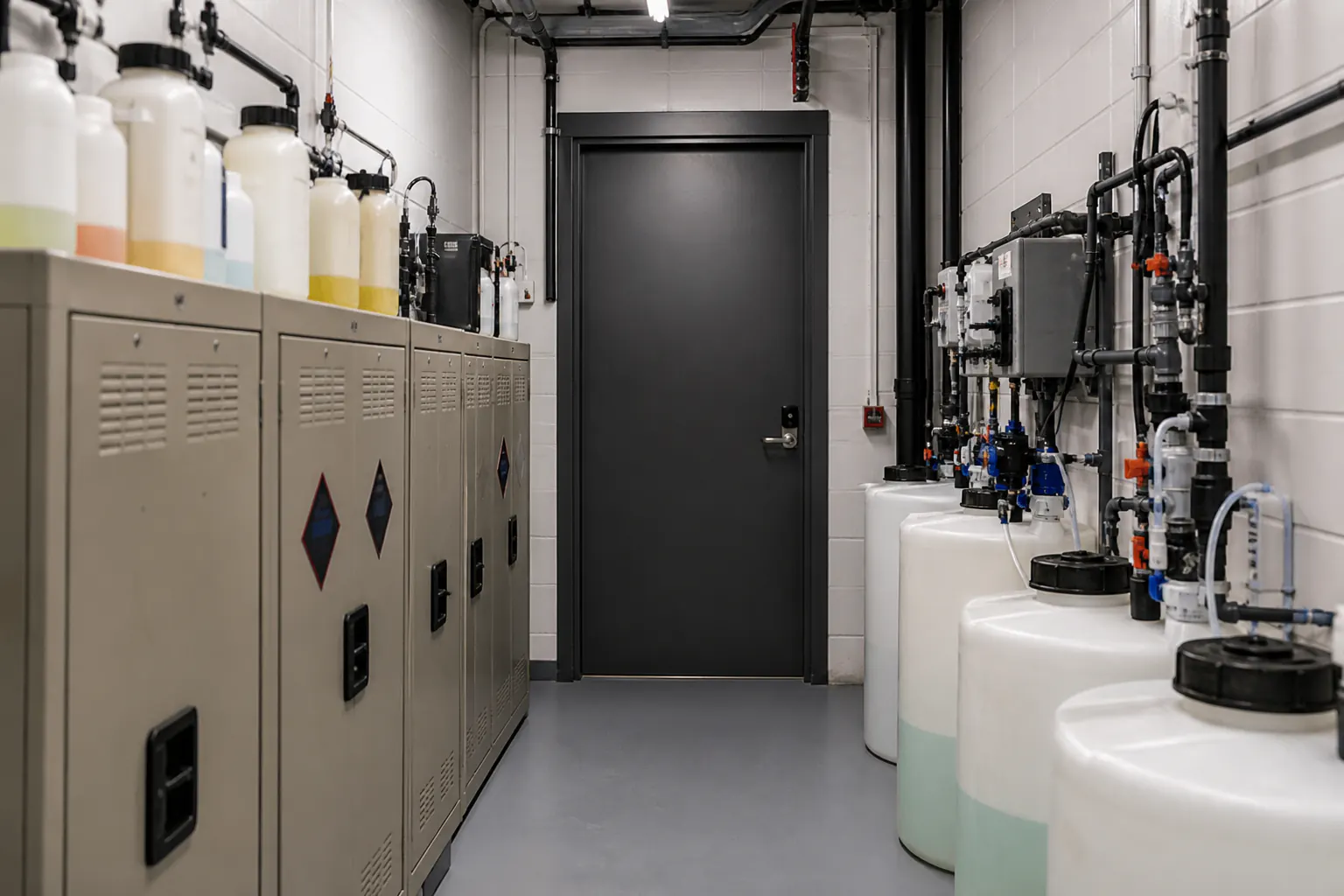
A hospitality pool that “works on opening day” and then drifts is usually a documentation failure. The handover set should include as-built drawings, valve charts, chemical and filter schedules, alarm call trees, spare-parts lists and the settings that were commissioned. If the operator cannot name who responds to a high-chlorine alarm at 22:00, the control scheme is incomplete.
Start with hotel and resort pool planning for redundancy, plant access and handover. Pair it with the equipment system overview and the equipment package checklist. Use the RFQ guide so bidders price the same duty/standby scope instead of a single-pump alternate that looks cheaper until the first outage.
Community and apartment pools share the same uptime problem with a thinner staff. If the on-site team is a porter and a weekly service route, the plant must be diagnosable from a short alarm list. Prefer documented set points, labeled valves and a spare-parts kit on site over a control scheme that only the commissioning technician understands. Write who closes the pool, who tests the water and who can shut equipment down after hours. If those roles are vacant on a holiday weekend, the design still has to fail safe.
These pages are planning and specification guidance. They are not a substitute for the project engineer, the health department review or a licensed installer in the project jurisdiction.
Planning guidance for hotel and resort pools; code-driven turnover, plant room redundancy, bather load, maintenance access, covers and handover documentation.