Key takeaways
- Guide P/N 178742 Rev. D says to clean at 8-10 psi above the original starting pressure, or when flow is significantly reduced. The rise is measured from the psi you record, not from a universal clean number.
- On a variable-speed pump the same guide says the starting pressure depends on rpm. Record the original pump rpm beside that psi. A low-speed reading is not a check against a high-speed baseline.
- The guide's maximum working pressure for this filter is 50 psi. That limit is not the cleaning trigger and not a target for a clean tank.
- A gauge that does not return to zero, does not move while the system runs, or cannot be read is replaced under the guide (Pentair P/N 190058). Do not log that needle as a baseline.
Comparing a gauge reading with a baseline from a different pump speed can send you to clean the cartridges too early, or leave a loaded filter in service. Write down the clean pressure at one rpm, then judge later readings against that row.
How do you read a pool filter pressure gauge? On a Pentair Clean & Clear RP, read it against the original starting pressure recorded at the same pump rpm. Installation guide P/N 178742 Rev. D, dated 8/20/25, says to clean the filter when pressure is 8-10 psi higher than that starting pressure, or when you notice a significant reduction in flow. The guide’s own table leaves the starting psi and the rpm blank. Those cells stay blank until you read them on this equipment. The 8-10 psi rise is the cleaning trigger in this guide. It is not a normal operating psi for every pool filter.
Scroll horizontally to see all columns when the table extends beyond the screen.
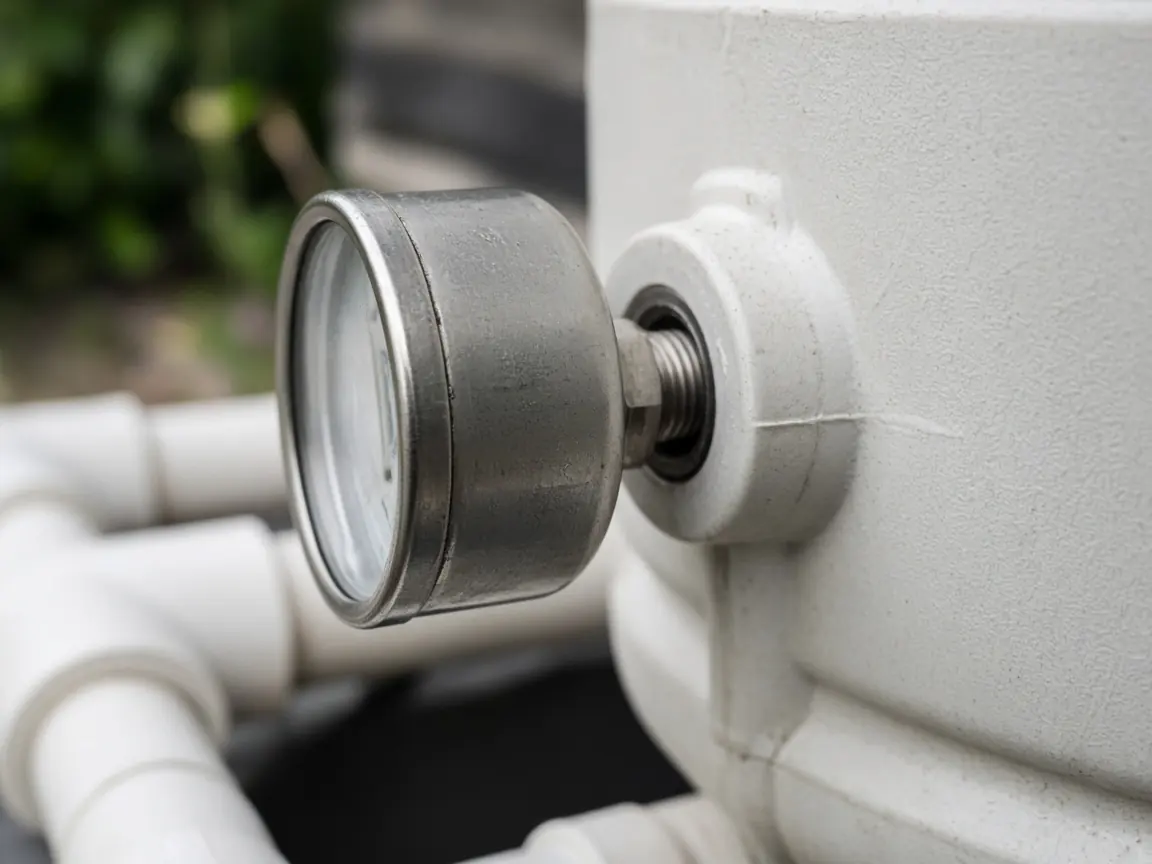
Which number is the original starting pressure?
The guide says the pressure gauge is the primary indicator of how the filter is operating. It also says the filter runs at its lowest pressure right after a clean, in the wording on Pentair’s Clean & Clear RP support page fetched 2026-10-11. Use a reading taken after that clean, with the pump at the speed you will use later, as the original starting pressure.
Table 1 in the guide is printed as blanks: original starting pressure in psi, the psi at which to service the cartridges, and, for variable-speed pumps only, the original pump rpm. This page does not supply those psi or rpm values. Copy them from the gauge and from the pump controller when you make the first clean run at that speed.
The support page adds a second mark: clean when the needle is at or near the clean-filter arrow. That sentence is on the support page. The installation guide’s numbered rule is the 8-10 psi rise over the original starting pressure, or a significant reduction in flow. If the gauge on the tank has no arrow, use the guide’s rise and the blank table. Do not invent an arrow position.
Pressure builds as the filter holds dirt. The guide says that build varies with bather load, temperature, and environmental conditions. The log still uses the same starting row. Those conditions explain why one week reaches the 8-10 psi rise sooner than another. They do not replace the starting pressure.
Choosing sand, cartridge, or DE is a different task. Use pool filter types compared for that choice. This log starts after a cartridge filter of this series is already installed.
What changes when the pump speed changes?
The guide’s note on variable-speed pumps says the original starting pressure depends on the pump speed, in rpm, at the time you record the original operating pressure. Record that original pump rpm in Table 1. A later reading counts against a row only when the pump is at that same rpm.
Keep one row per rpm you actually run. A low-speed reading compared with a high-speed starting pressure is outside that note. The guide does not publish how many psi the needle should move per rpm change, so this page does not estimate that gap. If the controller shows a speed name and you cannot read rpm, leave the rpm cell blank and do not treat that row as complete.
Valve position is not a line in Table 1. Write it beside the rpm anyway. A reading with a return closed, or with the filter valved out of the normal path, is not the baseline for filter mode. The pool pump sizing guide is where flow and head are selected. Do not turn this pressure log into that calculation.
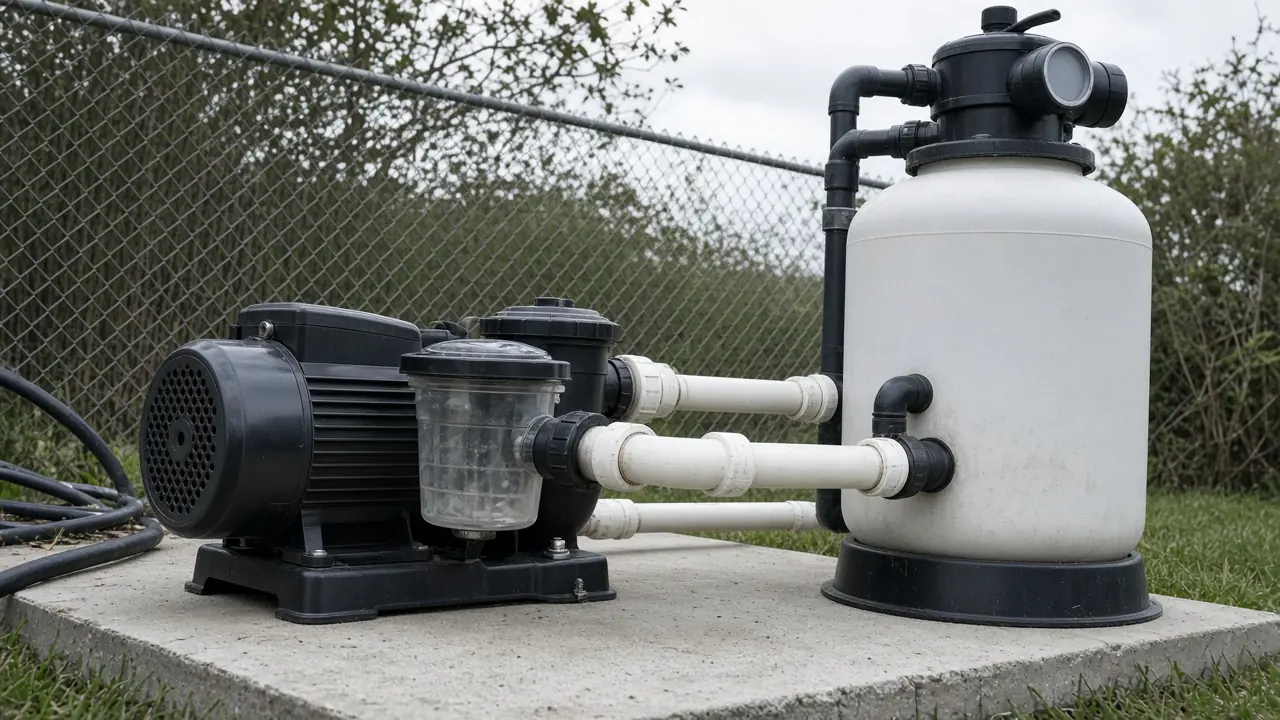
When does the guide say the gauge itself is the problem?
Maintain the gauge in good working order. The guide says to replace it, Pentair P/N 190058, when it fails any of these checks:
- The needle goes to zero when the system is turned off and pressure is relieved.
- The needle indicates pressure while the system is operating.
- The dial is readable and not damaged.
A needle that stays up after the system is off and relieved, or that never moves while the pump runs, fails that test. Replace it before you write a starting pressure. The part number is the guide’s replacement for this filter. It is not a claim that every brand uses the same gauge.
The guide also sets a maximum working pressure for this filter of 50 psi. It says never subject the filter to more than that, including during a hydrostatic pressure test. 50 psi is that limit. It is not the original starting pressure, and it is not the 8-10 psi cleaning rise. If the needle is at that limit, stop and follow the guide’s pressure warning. Do not keep the pump on to see whether the rise matches the log.
What does a drop mean, and when do you stop?
A drop is not the cleaning trigger. The cleaning trigger is a rise of 8-10 psi over the original starting pressure, or a significant reduction in flow. If pressure drops, the guide says to check the skimmer basket and the pump basket first. If those baskets are clean, the same troubleshooting item moves on to the pump and the suction line. This page does not perform those steps and does not diagnose a loss of prime. Shut off power to the pump and shut off automatic controls before anyone continues, and have a qualified pool technician take the next checks. The guide says to consult a qualified professional for maintenance and service.
Reading the gauge also includes two startup stop conditions in the same guide. After you open the manual air relief until it snaps fully open, stand clear, and start the pump, the system is not working properly if either of these happens: a solid stream of water does not appear within 30 seconds after the pump inlet basket fills with water, or the pressure gauge indicates pressure before water outflow appears. Shut the pump off immediately. The guide then points to the return-line valves and to cleaning the air relief, and tells you to call Pentair at (800) 831-7133 if the problem remains. Those steps are the guide’s stop. They are not a new baseline.
Do not open the tank while the gauge shows pressure. The guide says trapped air can separate the lid from the base. Before work on the lock ring or the relief valve, turn the pump off, shut off automatic controls, open the manual air relief, stand clear, and wait until pressure is relieved. For the relief-valve procedure, the gauge must read 0 psi. This page does not repeat the disassembly steps.
What do you keep?
Fill a row only where you can read the value. Leave the rest blank. Keep the sheet with the manual. Other equipment notes are on the pool equipment system overview.
Scroll horizontally to see all columns when the table extends beyond the screen.
The service-pressure cell stays blank until the starting-pressure cell has a number you read. Adding 8 psi and adding 10 psi are the two ends of the guide’s range. The guide does not pick one integer inside that range for every pool.
When this log does not apply
Stop using these lines when the nameplate is not a Clean & Clear RP covered by guide P/N 178742 Rev. D. Another filter can use a different rise. Leave its cells blank and open that manual. Stop the comparison when the pump rpm or the valve positions differ from the row. Stop the log when the gauge fails the zero, operating, or readable checks. Do not use 50 psi as a clean target. Do not open the filter from this page.
A row that matches can still sit next to a flow problem the gauge does not explain. The guide’s flow comment is “a significant reduction in flow,” with no gpm in that sentence. This page does not add one.
How this page was checked
The 8-10 psi rise, Table 1’s blank starting pressure and rpm, the variable-speed note, the 50 psi maximum working pressure, the three gauge checks, gauge part P/N 190058, the basket-first pressure-drop item, and the 30-second and pressure-before-outflow stops are from Pentair installation guide P/N 178742 Rev. D, dated 8/20/25. The post-clean low pressure and the clean-filter arrow are from Pentair’s Clean & Clear RP support page. Both copies were fetched on 2026-10-11 and read again for this page. Where the support page’s arrow and the guide’s 8-10 psi rise are different marks, the log says so and uses the guide for the psi arithmetic.
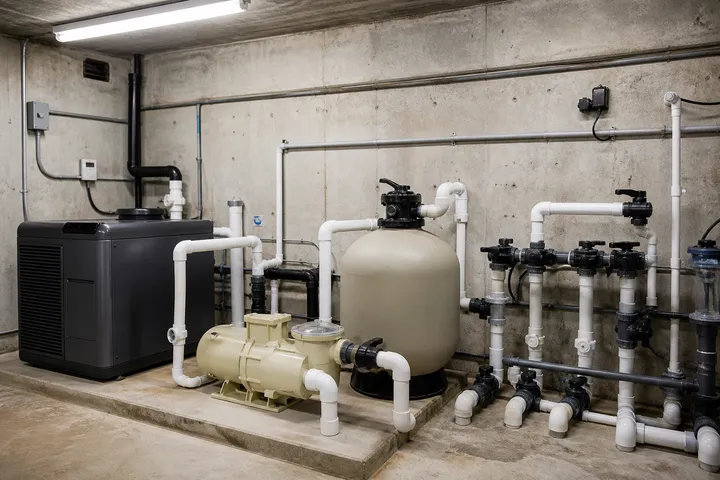
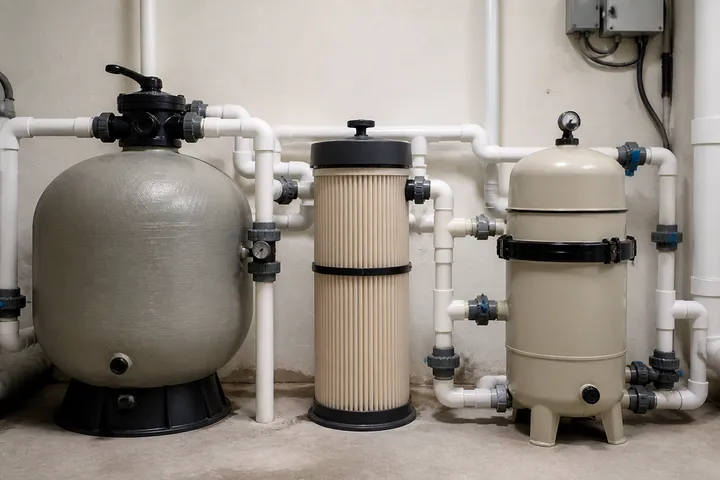
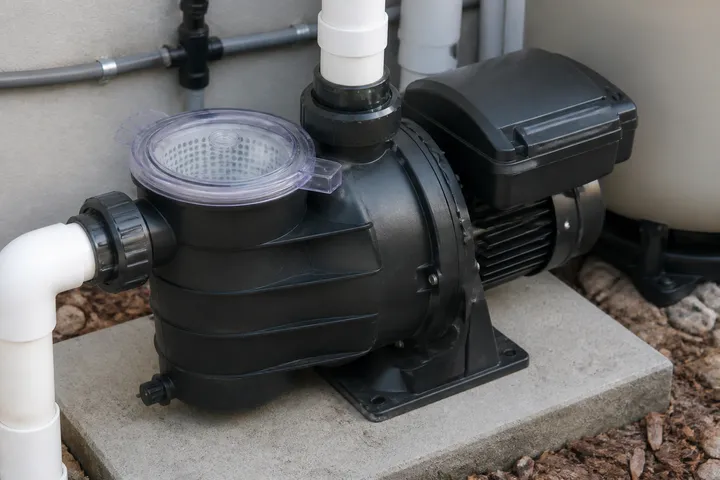
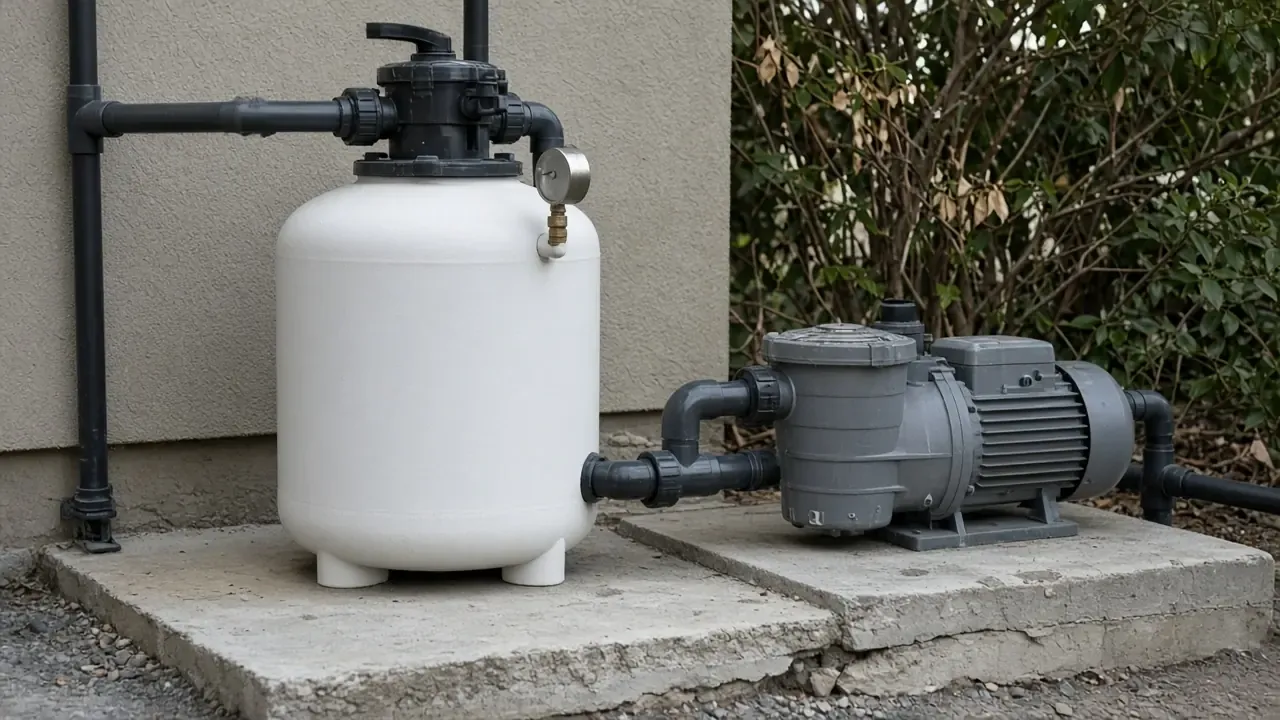
No cell in the tables above is a sample pool. The photographs show unlabeled equipment. They are not a Pentair nameplate, a customer pool, or a measured psi.
Frequently asked questions
What should a pool filter pressure gauge read?
For a Clean & Clear RP, the guide does not print a normal operating psi. Write the original starting pressure you see at a stated rpm. Clean when the reading is 8-10 psi above that line, or when flow is significantly reduced. Another brand's gauge needs that brand's manual. This page does not fill the blank for you.
Is 20 psi high for a pool filter?
20 psi is not a verdict in guide P/N 178742. Compare it with the original starting pressure recorded at the same rpm. The cleaning line is 8-10 psi above that starting pressure. 20 psi can be the clean line on one row and already past it on another. The 50 psi figure in this guide is the filter's maximum working pressure, not a clean target.
How do you test a pool filter pressure gauge?
The guide's three checks are: the needle goes to zero when the system is off and pressure is relieved; the needle indicates pressure while the system is operating; the dial is readable and undamaged. If any check fails, the guide says to replace the gauge, Pentair P/N 190058. A failed gauge is not a filter-cleaning result.
Sources
- Clean & Clear RP Cartridge Filter Installation and User's Guide, P/N 178742 Rev. D — Pentair Accessed October 14, 2026.
- Clean & Clear RP Filter Safety Product Support — Pentair Accessed October 14, 2026.