Direct answer
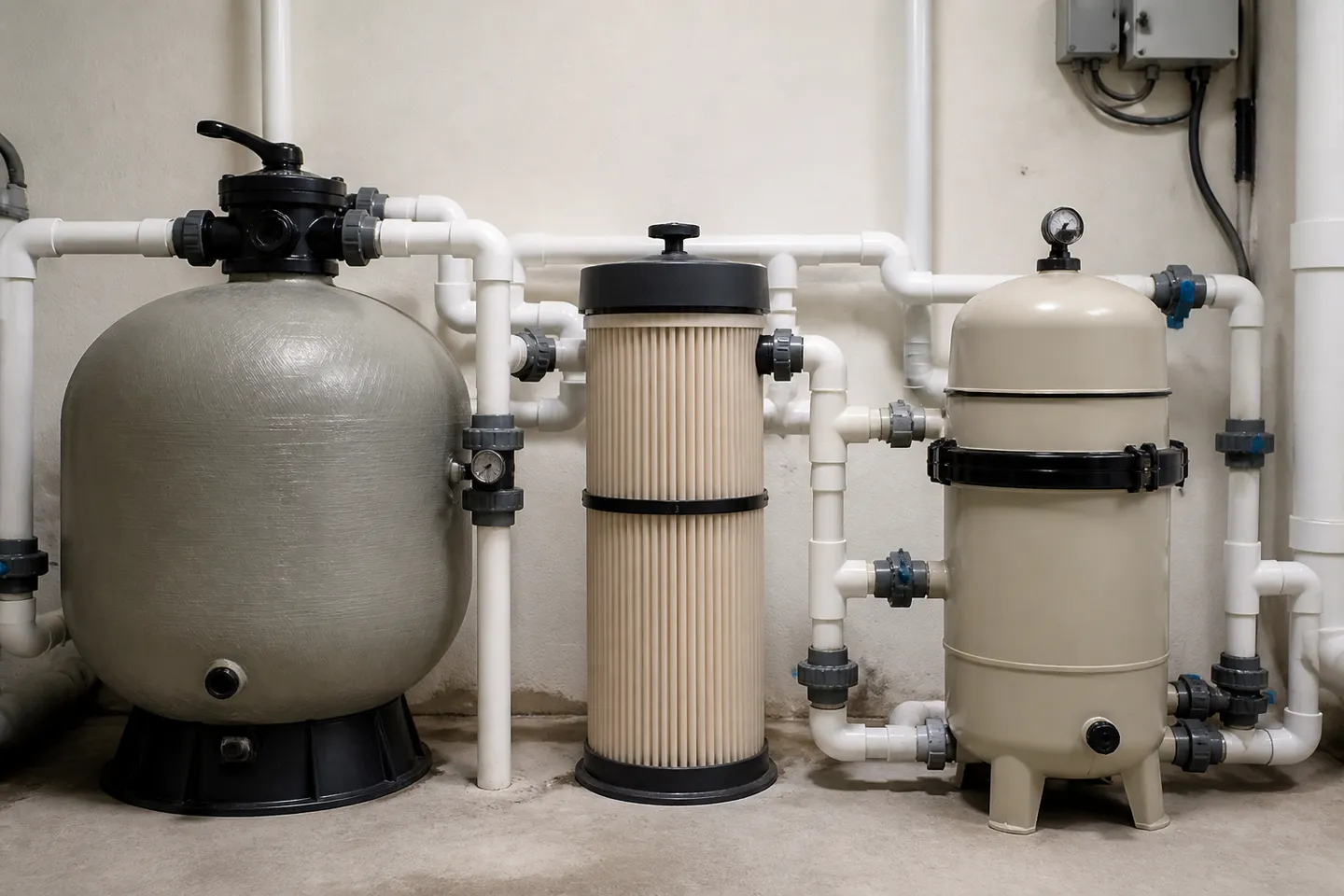
Sand filters are simple and tolerate dirty water but filter more coarsely and use backwash water. Cartridge filters capture finer debris and waste no backwash water, but they need periodic cleaning and spare cartridges. Diatomaceous-earth filters give the finest filtration at the cost of more maintenance and media handling.
Key takeaways
- Choose the filter against the same design flow used to size the pump, not from a catalog horsepower shortcut.
- Sand suits robustness and easy service; cartridge suits water-scarce sites; DE suits the finest water clarity.
- Commercial pools often prefer media that staff can backwash quickly and monitor by pressure.
- Filter area must stay inside the manufacturer's flux limit at design flow, including a dirty-filter margin.
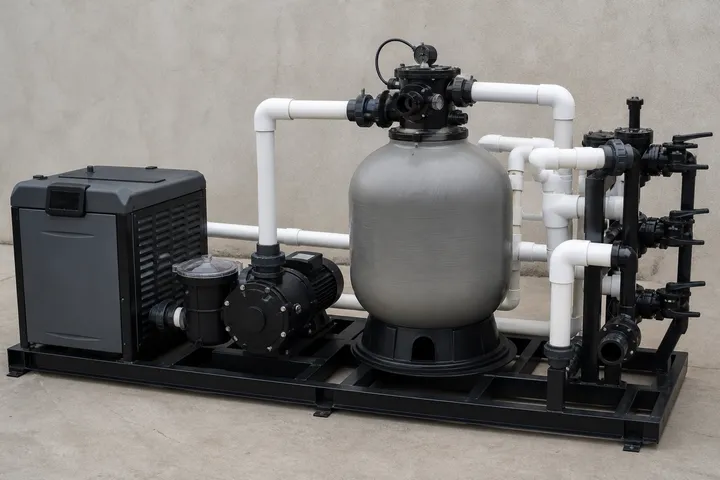
Start the comparison with one design flow. Check each filter’s rated flow, filter area, pressure behavior, cleaning method and water use at that point. The pump and filter are parts of the same circulation loop.
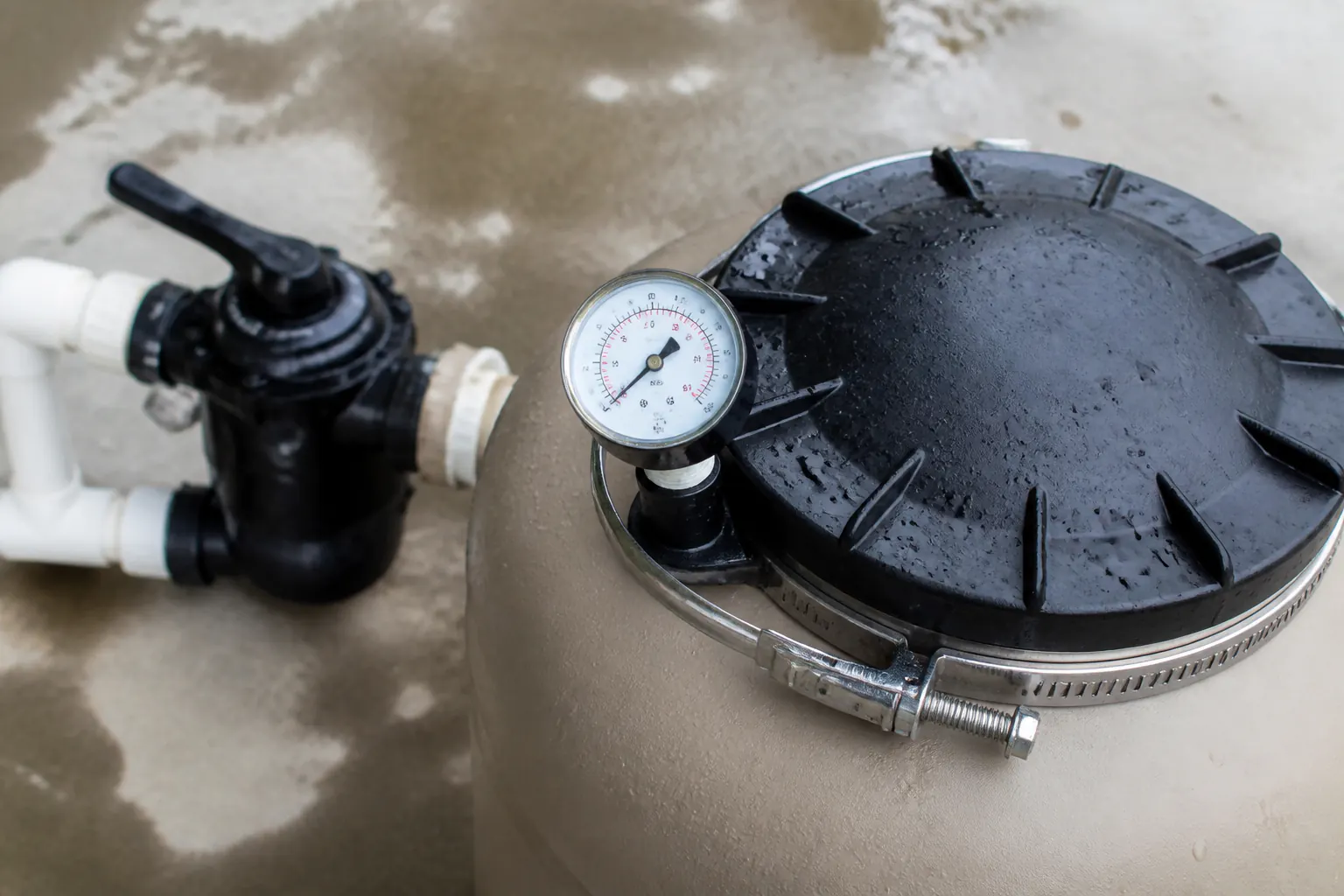
Who each option is for
- Sand: owners and operators who want simple backwash service and tolerance for dusty or leafy sites.
- Cartridge: projects that cannot spare backwash water, or rooms too small for a sand vessel and waste line.
- Diatomaceous earth (DE): projects that want the finest clarity and will handle media replacement correctly.
Compact comparison
| Factor | Sand | Cartridge | DE |
|---|---|---|---|
| Typical capture | Coarser | Finer | Finest |
| Cleaning method | Backwash | Remove and hose or soak | Backwash plus media recharge |
| Water wasted in cleaning | Yes | No | Yes |
| Media handling | Occasional sand change | Spare cartridges | DE powder, disposal rules |
| Head when dirty | Rises with packing | Rises as the cartridge loads | Rises; needs close pressure watch |
| Typical project fit | Robust residential and many commercial rooms | Water-scarce and compact rooms | Clarity-first residential plants |
Performance and maintenance differences
Sand filters clean in place. That is why commercial staff often prefer them: a backwash does not require opening the vessel during guest hours. The trade-off is water use and coarser filtration, so chemistry and skimming have to do more of the clarity work.
Cartridge filters move the labor from water to handling. There is no backwash line to size, which helps tight equipment rooms and drought-conscious sites. The room still needs space to withdraw the cartridge stack; a clearance many drawings forget.
DE filters sit at the fine end of the range. They need careful pressure monitoring and correct media recharge. The proposed maintenance method should match the operator’s ability and the applicable disposal requirements.
Size the filter before comparing tank prices
Put the project design flow at the top of the comparison sheet. For each model, record the manufacturer’s filter area, maximum recommended flow and the clearance needed to clean or replace its media. Do not compare a small cartridge unit with a larger sand vessel as though the tank type were the only difference.
The filter also adds resistance to the circulation system. Ask for the product information used in the pump selection and make sure both items refer to the same flow. If a bidder changes filter type or size, recheck the pump sizing guide rather than assuming the original operating point still applies.
Draw the service task into the room
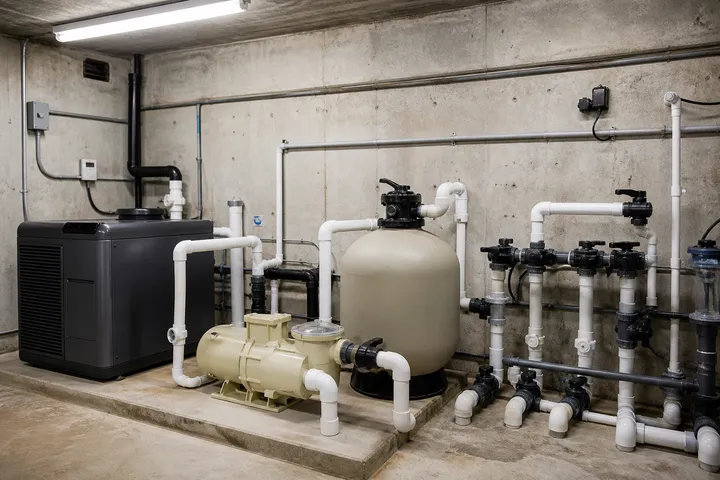
The equipment-room plan should show how the filter is opened and cleaned:
| Filter type | Space or connection to show |
|---|---|
| Sand | Valve access, backwash route and access for future media work |
| Cartridge | Vertical or side clearance to remove the cartridges and a place to clean them |
| DE | Service clearance, backwash or cleaning route and space to handle the specified media |
Check the route from the room door to the installed filter. A unit can fit on the floor plan and still be impossible to remove after pipes, panels and doors are in place.
Climate and project considerations
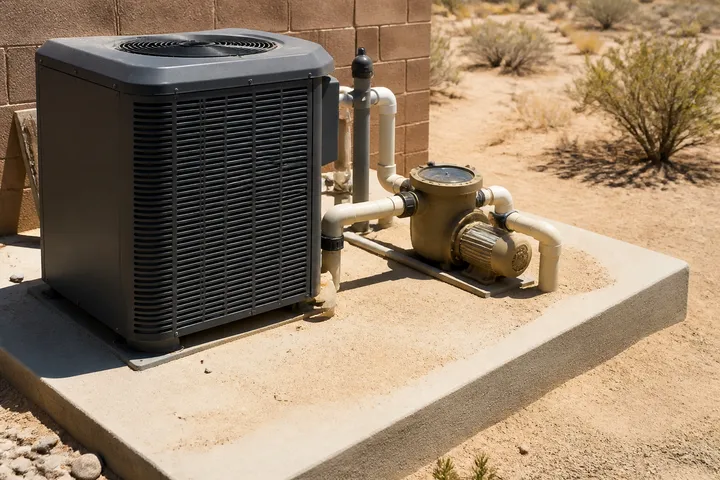
Hot, dusty sites load every filter faster. That does not automatically mean “buy sand”; it means size area generously, give staff a cleaning method they will actually use, and cut the debris load with a cover. See pool equipment for hot climates.
Hotel and community pools add code and downtime constraints from the CDC Model Aquatic Health Code framework; plan filter redundancy and service access in the hotel pool planning guide.
Match the type to the operating constraints
If the site cannot provide a practical backwash route, a cartridge proposal deserves a close look. If staff need an in-place cleaning process, a sand proposal may suit the operating plan. A DE proposal should include the media handling and cleaning steps expected on that site. The governing code and manufacturer instructions take priority over these general comparisons.
In every case, write the filter area and maximum flow on the equipment package checklist next to the pump’s design point.
What to ask a supplier
Request the maximum recommended flow, filter area, dirty-filter pressure rise, media specification, and the physical clearance to service the unit. Put those numbers on the same schedule you send with the RFQ.
At commissioning, record the pressure in clean operating condition and the pump setting used for that reading. Keep the cleaning procedure and replacement-media details with the plant manual. Those records give the operator a real baseline for the installed system.
Frequently asked questions
Which filter type is best for a residential pool?
There is no single best type. Sand is the most forgiving, cartridge saves backwash water, and DE produces the finest clarity if the owner will maintain it. Match the type to water quality, water cost and who will service the plant.
Can I swap filter types later without changing the pump?
Sometimes, if the new filter accepts the same design flow and the pipe unions line up. Changing type can change head, so re-check the pump curve and turnover before ordering.
Sources
- Model Aquatic Health Code — U.S. Centers for Disease Control and Prevention Accessed August 23, 2026.
- Pool and Spa Filters — Pentair Accessed August 23, 2026.
- ANSI/PHTA/ICC-4 2024 — Pool & Hot Tub Alliance Accessed August 23, 2026.