Direct answer
A pool equipment package is complete when every component is sized to one turnover target and one design flow, the room can accept the real dimensions and clearances, and the quotation includes valves, controls, documentation and spare parts; not only the pump, filter and heater nameplates.
Key takeaways
- Write one design flow and estimated head at the top of the schedule; every line item must honor it.
- List small parts (valves, unions, sensors, chemical tubing) or they become commissioning extras.
- Room, electrical and drainage provisions are part of the package, even when another trade installs them.
- Use the same checklist for every bidder so quotations stay comparable.
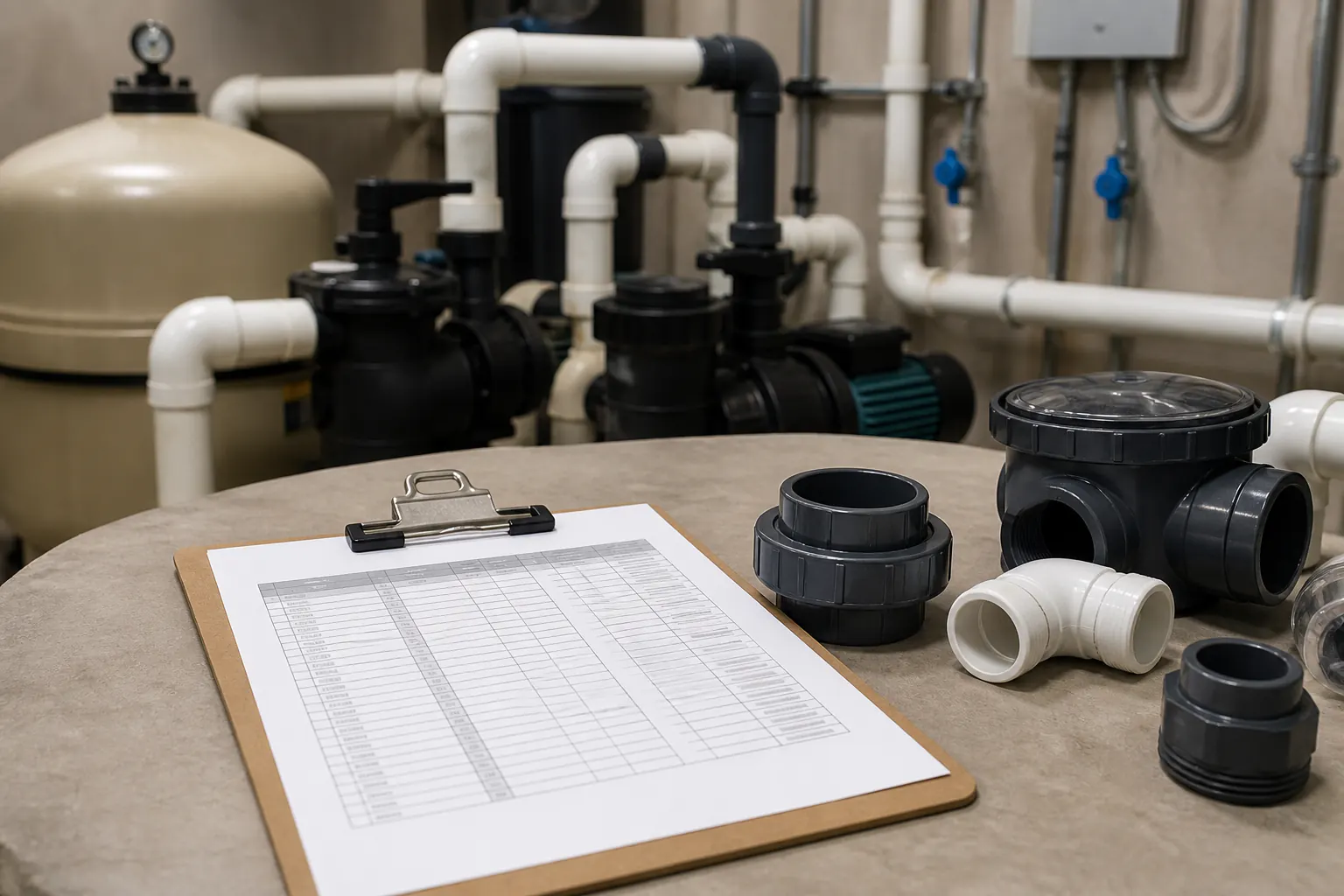
Use this checklist after the system overview and before the RFQ. It gives the designer, contractor and suppliers one shared list of assumptions and equipment.
When to use it
- New pool design development, before the equipment room is frozen;
- Renovation upgrades, when several items will be replaced together;
- Comparing quotations, to see which offer silently dropped accessories.
Start the checklist with the current drawing revision and name the person responsible for the master copy. A checked box should mean that the item has a value, model, drawing reference or named owner. It should not mean that someone discussed it in a meeting.
Add status and responsibility columns
Turn the checklist into a working schedule with these columns:
| Column | Purpose |
|---|---|
| Item and quantity | Identifies what is being supplied |
| Design input | Records flow, head, area, output or another sizing basis |
| Proposed model | Links the schedule to the supplier data sheet |
| Supplied by | Names the package or trade responsible for delivery |
| Installed by | Names the trade responsible for connection and setting |
| Drawing reference | Shows where location or interface details appear |
| Status | Open, proposed, approved, delivered or commissioned |
This format exposes gaps between packages. A floor drain may be shown on the room drawing but excluded from the equipment supplier’s scope. That is acceptable when another trade owns it and the schedule says so.
Shared design inputs
- Pool volume (from drawings or the volume calculator);
- Turnover target and resulting design flow;
- Estimated total dynamic head, using the pump sizing method;
- Residential or commercial duty, and the governing code if commercial;
- Climate notes, especially if the site matches hot-climate equipment;
- Cover decision, because it changes heat, debris and power routing.
Component schedule
- Skimmers, main drains, returns and listed drain-cover compliance;
- Pump: model range, design point, strainer, unions, variable-speed if used;
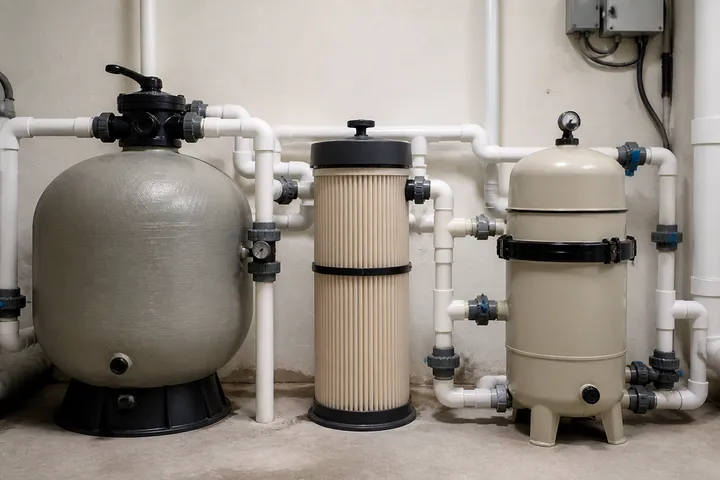
- Filter: type, area, maximum flow; see filter types compared;
- Heating or cooling: output, clearances, condensate or flue provisions;
- Sanitization and any supplemental oxidizer, with injection point after the heater;
- Valves, manifolds, check valves and labeled isolation;
- Automation panel, sensors and user interface;
- Automatic cover system as a complete component set, if included;
- Lighting, water-level control and any water features, each with flow stated.
Review the schedule as a connected loop. The pump design point, filter flow range, heater limits and treatment path must refer to the same operating mode. If a spa, cleaner or water feature has a separate mode, show that mode on the hydraulic schematic rather than hiding it in a note beside one product.
For every proposed substitution, keep the original requirement in the schedule and add the alternative beside it. This prevents an approved product name from replacing the reason it was selected.
Room, power and drainage
- Equipment-room dimensions and service clearances from the room design guide;
- Ventilation, floor drain and chemical separation;
- Electrical loads, protection, bonding and conduit routes, including cover housing;
- Waste line for backwash if a sand or DE filter is specified.
Documents and spares
- Data sheets, manuals and warranty terms required at quotation; reuse the RFQ template;
- Recommended spare parts: lids, cartridges or sand, seals, salt cell if used;
- Commissioning values to record: flow, pressures, dosing setpoints.
Use the same schedule through delivery
Issue the schedule with the RFQ and require bidders to respond line by line. After award, replace proposed models with approved models but keep the original design inputs. At delivery, check quantities and nameplates against the same document.
During commissioning, add the final pump settings, clean-filter pressure, valve positions, treatment settings and any control mode names used on site. Attach the related manuals and as-built drawings. The result is a useful operating record rather than a procurement list that stops being updated once the order is placed.
If an item remains open at handover, record who owns it and the date or event that closes it. Do not remove the row to make the schedule appear complete.
Related pages
Pair this checklist with the drawings and BOM checklist so the package and the drawing set describe the same project. Cluster guides live in the Pool Equipment & Automation hub.
Frequently asked questions
What is the difference between an equipment list and an equipment package?
A list names products. A package states the shared hydraulic assumptions, the accessories needed to make those products work, and the documents required at delivery.
Should the automatic cover appear on the equipment package?
Yes, if the project includes one. The cover changes heat load, debris load and conduit routing, so it belongs on the same schedule as the circulation plant.
Sources
- Pool Pumps — ENERGY STAR Accessed August 23, 2026.
- Model Aquatic Health Code — U.S. Centers for Disease Control and Prevention Accessed August 23, 2026.
- 2025-2026 Pool and Spa Product Catalog — Pentair Accessed August 23, 2026.