Direct answer
Pool volume is estimated from surface shape and average depth; length times width times depth for a rectangle, and the matching circle or oval formula for those shapes. Use the result to start pump, filter and chemical planning, then confirm the volume on drawings or a site measure before you specify equipment.
Key takeaways
- Average depth is half the sum of the shallow and deep ends only when the floor slope is even.
- Freeform pools need a drawing takeoff or several measured zones; one rectangle will be wrong.
- State the unit system on every RFQ. Mixed meters and feet are a common quotation error.
- Volume feeds turnover, sanitizer and heater sizing; keep it next to the equipment schedule.
Use the calculator, then copy the result onto the equipment package checklist and the new pool planning checklist. Turnover and pump flow both start from this number.
Formulas used
| Shape | Formula |
|---|---|
| Rectangle | length × width × average depth |
| Circle | π × (diameter ÷ 2)² × average depth |
| Oval | π × (length ÷ 2) × (width ÷ 2) × average depth |
Imperial results are converted at 7.48052 U.S. gallons per cubic foot. Metric results are shown in cubic meters and liters.
Measure before entering values
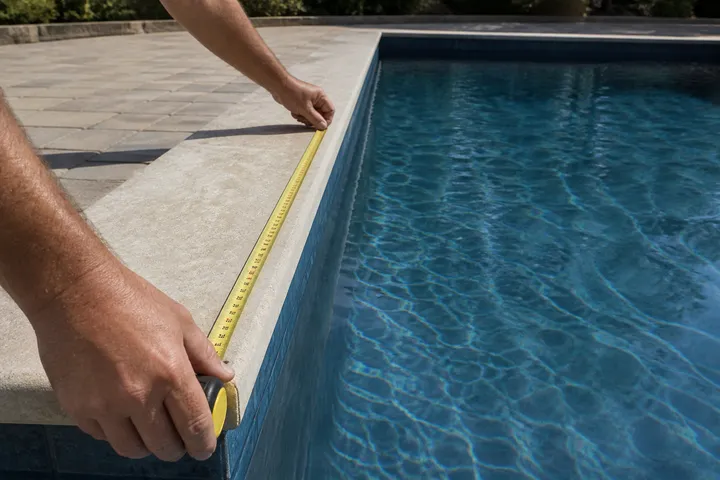
Use water dimensions rather than an outside shell or deck dimension. Record the length and width at the water surface. For a circular pool, measure the diameter through the center. For an oval, measure the longest length and widest width.
Average depth needs more care. Taking half the sum of the shallow and deep depths assumes the floor changes evenly between them. If the pool has a long shallow shelf, a flat deep section or several slopes, divide it into zones and calculate each zone separately. Add the zone volumes at the end.
Keep all entries in one unit system. Convert the source measurements before using the calculator rather than mixing feet, meters or inches inside one calculation. Save the original measurements with the result so another person can check the estimate.
Handle irregular pools in sections
Break a freeform or combined pool into simple shapes that follow the drawing as closely as practical. A rectangular swimming area and a circular spa, for example, should be calculated separately. Use a separate average depth for each zone when their floor profiles differ.
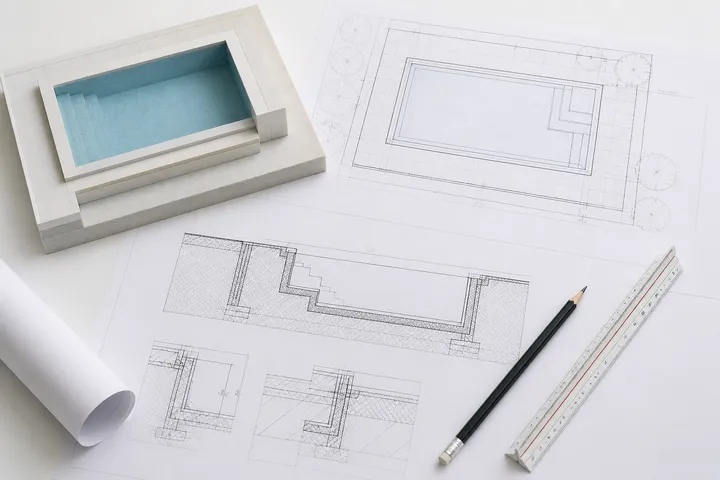
Label the sketch with the same zone names used in the calculation. Do not count an overlapping area twice. If the shape cannot be represented sensibly with rectangles, circles or ovals, use the construction drawing takeoff or a measured project volume instead of forcing it into this estimator.
Check the result
Keep these items with the calculated volume:
- source drawing or survey date;
- unit system;
- dimensions entered for each zone;
- method used for average depth;
- person who prepared the estimate;
- any area omitted or simplified.
The record matters when the pump, filter or treatment schedule is reviewed later. A volume copied without its dimensions is difficult to correct when the pool geometry changes.
After you have a volume
- Set a turnover target and size the pump against flow and head;
- Check that the filter can accept that flow;
- Put volume, flow and head on the RFQ template.
For an existing pool, compare the estimate with any reliable drawing or prior operating record available to the project. If the values differ, resolve the dimensions before using the volume for equipment selection or chemical planning.
More working documents are in the Tools & Templates hub.
Frequently asked questions
Is this calculator accurate enough for a chemical dose?
No. It is a planning estimate. Dose from a measured or drawing-based volume, and follow the chemical manufacturer's instructions.
How do I estimate a freeform pool?
Break the water surface into rectangles and circles, calculate each zone, and add them. Or take the volume from the construction drawings.
Sources
- Pool Pumps — ENERGY STAR Accessed August 23, 2026.