Direct answer
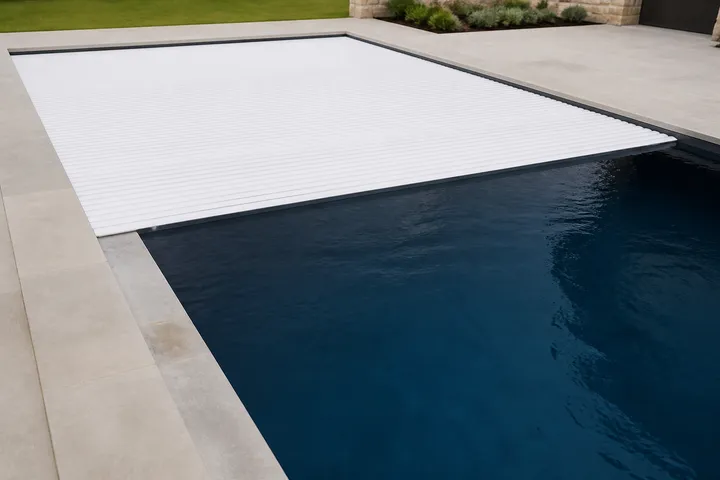
An automatic pool cover is specified as eight working parts (fabric, tracks, drive mechanism, motor or hydraulic power unit, roller, housing, controls and drainage) plus installation accessories. A quotation that prices only the fabric is not a system quotation.
Key takeaways
- Write the bill of materials as a system, not as a cover product plus extras.
- Track type and housing type lock in appearance, retrofit feasibility and drainage design.
- Controls and limit settings are safety components, not optional electronics.
- Pit drainage and service access decide how long the drive actually lasts.
The complete automatic pool cover guide covers the early planning decisions. This page turns those decisions into a parts list. A quotation should identify each item and state who supplies or installs it.
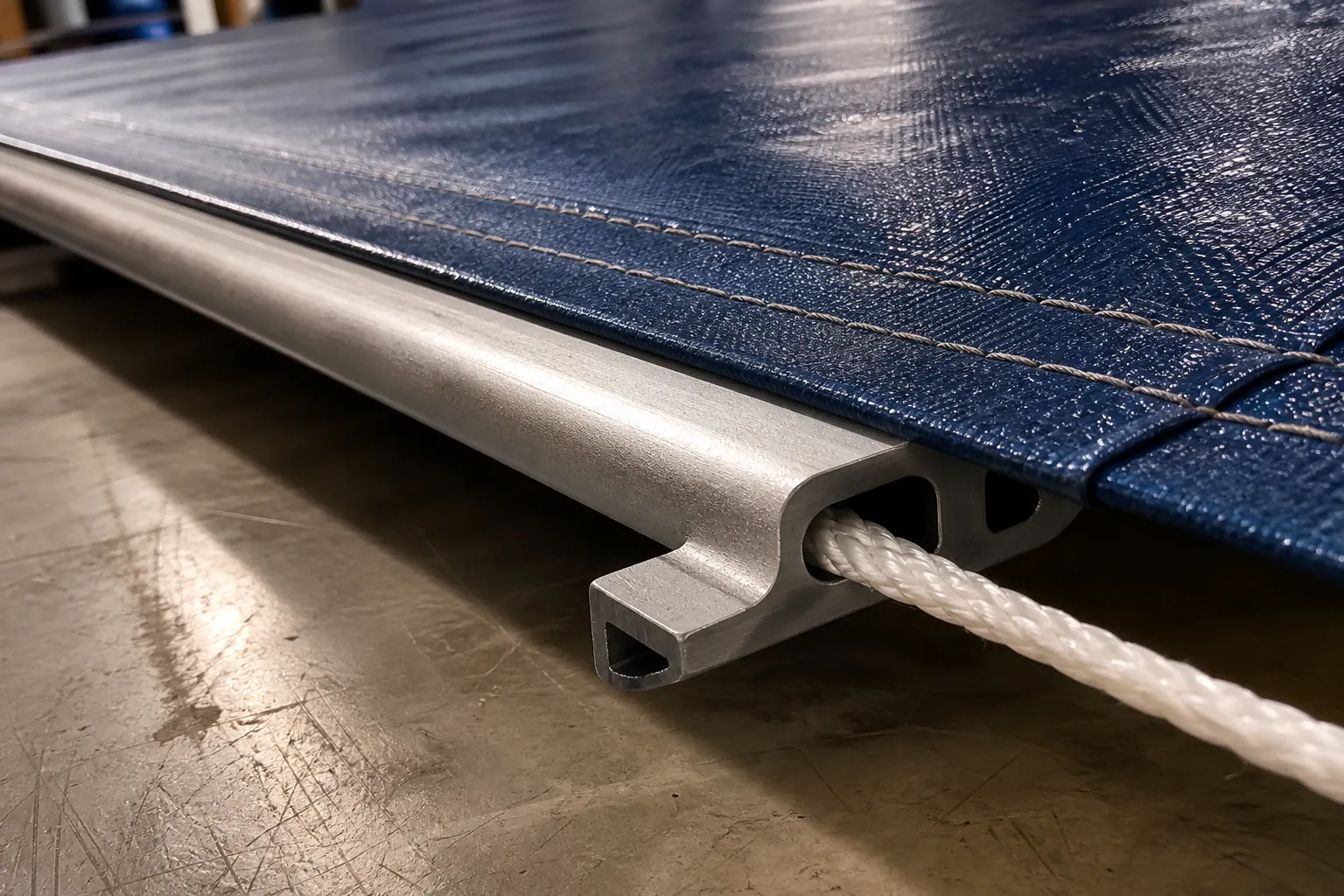
The system, not the product
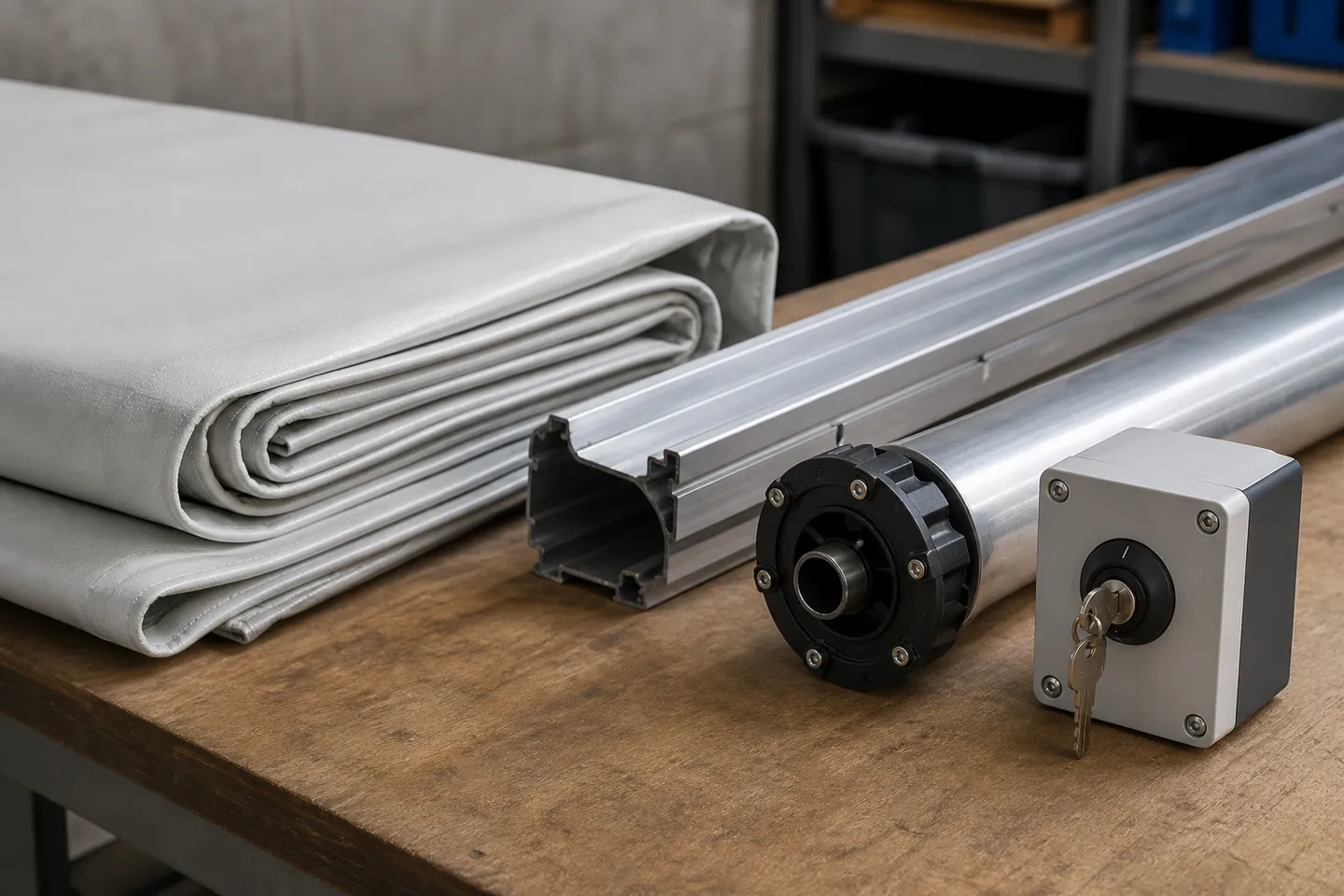
Fabric
+ Tracks
+ Drive mechanism
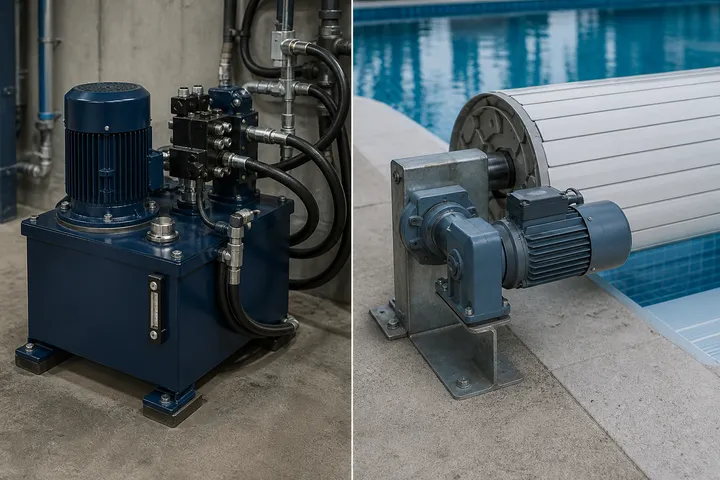
+ Motor or hydraulic power unit
+ Roller
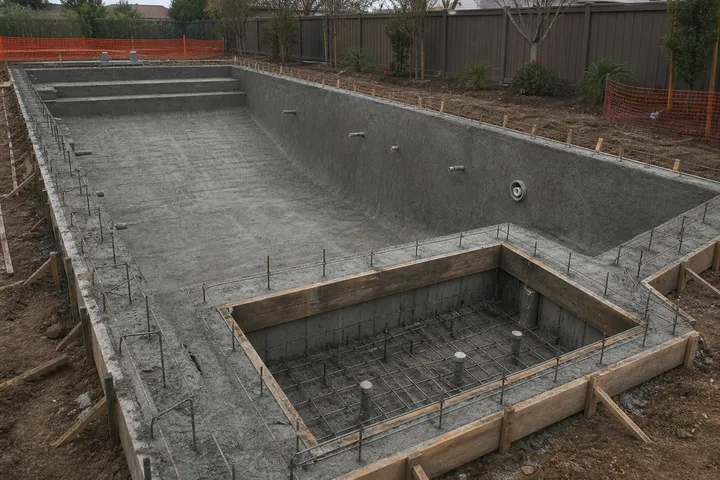
+ Housing
+ Controls
+ Drainage
+ Installation accessories
Specify these parts together so the quotation and drawings describe the system that will arrive on site.
Component checklist
| Component | What to record | Typical failure if omitted |
|---|---|---|
| Fabric | Material, color, UV rating, leading-edge attachment | Short fabric life or a cover that does not meet the safety claim |
| Tracks | Undertrack, toptrack or deck-mounted; length; fixing detail | Binding, visible hardware surprises, retrofit dead ends |
| Drive mechanism | Ropes, tapes or gears; travel limits | Incomplete travel or uneven leading-edge pull |
| Motor or HPU | Electric at the roller, or remote hydraulic power unit | Heat, moisture or duty-cycle problems after handover |
| Roller | Width, bearing access, lid clearance | Housing that fits the roller but not service |
| Housing | Recessed pit, bench or above-deck casing | Deck redesign after concrete is finished |
| Controls | Key switch, keypad, automation interface, lockout | Unsupervised operation or no emergency stop logic |
| Drainage | Pit outlet, slope, pump if needed | Motor and fabric sitting in standing water |
| Accessories | Guide blocks, webbing, coping details, bonding | Punch-list items billed as extras |
Track choice is explained in undertrack vs toptrack. Drive choice is explained in hydraulic vs electric drives. Housing options change completely between new builds and retrofits.
Check the interfaces between parts
A complete list can still hide a coordination problem. Review the places where one part meets another:
| Interface | What the drawing or quotation should settle |
|---|---|
| Fabric and leading edge | Attachment method, finished width and clearance at the pool sides |
| Track and coping | Track profile, fixing method and the finished surface around it |
| Roller and housing | Roller width, bearing access, lid support and space for removal |
| Drive and services | Motor or power-unit location, cable or hose route and isolation point |
| Housing and drainage | Outlet location, route and access for cleaning |
| Controls and operator | Control position, visibility of the pool and access restriction |
Put this review on the drawing set as well as the supplier’s workshop notes. It lets the structural, deck and electrical trades see the dimensions they own before those details are built.
Write schedule lines that can be checked
For the fabric, record the proposed material, color, leading-edge connection and the supplier’s climate guidance. Hot-climate projects need the extra questions listed in covers in hot climates.
Put tracks and housing on the structural drawing with dimensions and finished levels. For the drive and controls, state the service location, electrical or hydraulic connection, enclosure information and control position. The drainage line should name an outlet and route. Leaving it as a site decision gives no trade a clear responsibility.
Accessories deserve their own rows. A guide block, lid bracket or length of webbing may be small, but the system cannot be finished without it. Separate quantities also make a later shortage easier to identify.
What to send with the quotation request
Use the measurement sheet for dimensions, then attach this component list to the pool equipment RFQ so bidders price the same system. Related guides sit in the Automatic Pool Covers & Safety hub.
Ask each bidder to return the same list with a model, quantity and inclusion status beside every row. Alternatives should be marked rather than folded silently into a total. If builder work is excluded, the quotation should identify the related drawing requirement, such as the pit, conduit or drainage connection.
Delivery and handover record
Check delivered parts against the approved component list before installation starts. Record missing or substituted items while packaging and labels are still available. At handover, keep the installed model information, manuals, control instructions, final settings and warranty with the as-built drawings.
The installer should also show how the housing opens for service, where the drive is isolated and how the pit drains. Those checks reveal whether the system on site matches the one that was quoted.
Frequently asked questions
What must be on a complete cover quotation?
Fabric type and color, track type and length, drive type, roller size, housing type, controls, drainage provisions, and the accessories needed to finish the deck and leading edge.
Can I mix components from different manufacturers?
Only when the supplier confirms mechanical and control compatibility in writing. Tracks, ropes or tapes, leading-edge hardware and limit settings are usually designed as one family.
Sources
- ASTM F1346 Standard Performance Specification for Safety Covers — ASTM International Accessed August 23, 2026.
- WaterSense at Work, Commercial Pool and Spa Equipment — U.S. Environmental Protection Agency Accessed August 23, 2026.
- General Installation Overview — Cover-Pools Accessed August 23, 2026.