Direct answer
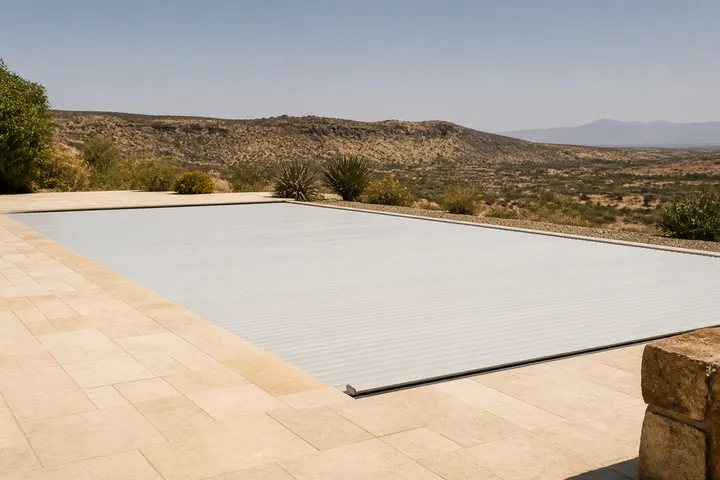
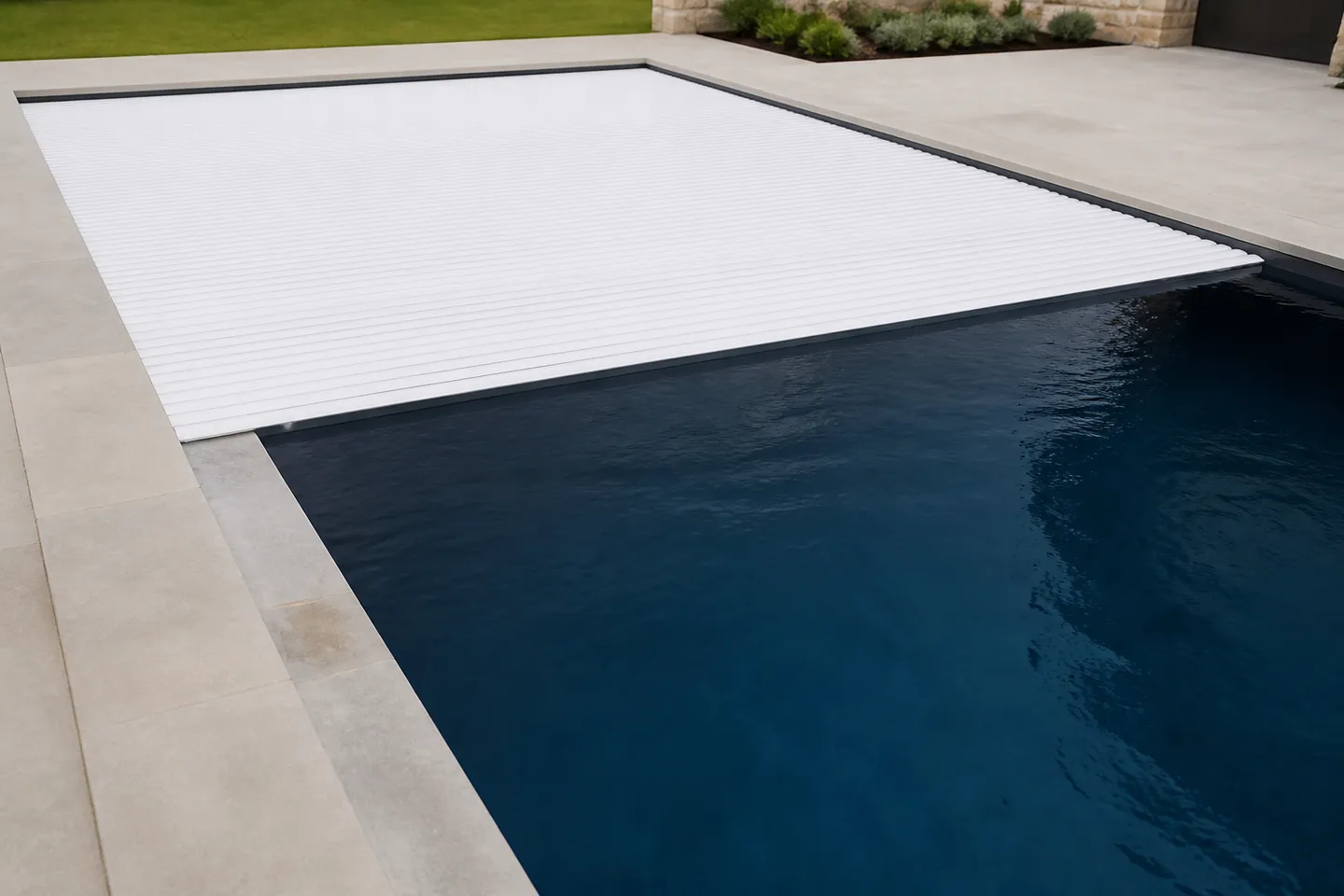
An automatic pool cover moves reinforced fabric across the pool on tracks. A complete system includes the fabric, tracks, drive, roller, housing, controls and drainage. Configuration depends on the pool geometry, whether it is new or existing, and where the mechanism can be installed and serviced.
Key takeaways
- Specify the complete system, including fabric, tracks, drive, roller, housing, controls, drainage and installation accessories.
- The biggest planning decisions are new build vs retrofit, undertrack vs toptrack, and hydraulic vs electric drive.
- Covers reduce evaporation and heat loss substantially, which matters most in hot, dry climates.
- A safety-rated cover must meet ASTM F1346 performance requirements, and no cover replaces supervision.
An automatic cover can control access, reduce evaporation and limit debris when the model, installation and operating conditions support those functions. The housing, tracks, drainage and controls all affect the finished pool, so cover planning should begin with the pool design rather than at the end of construction.
How the system works
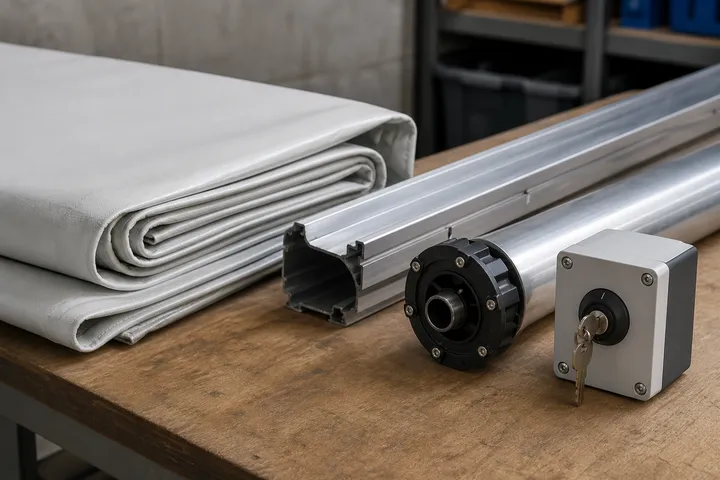
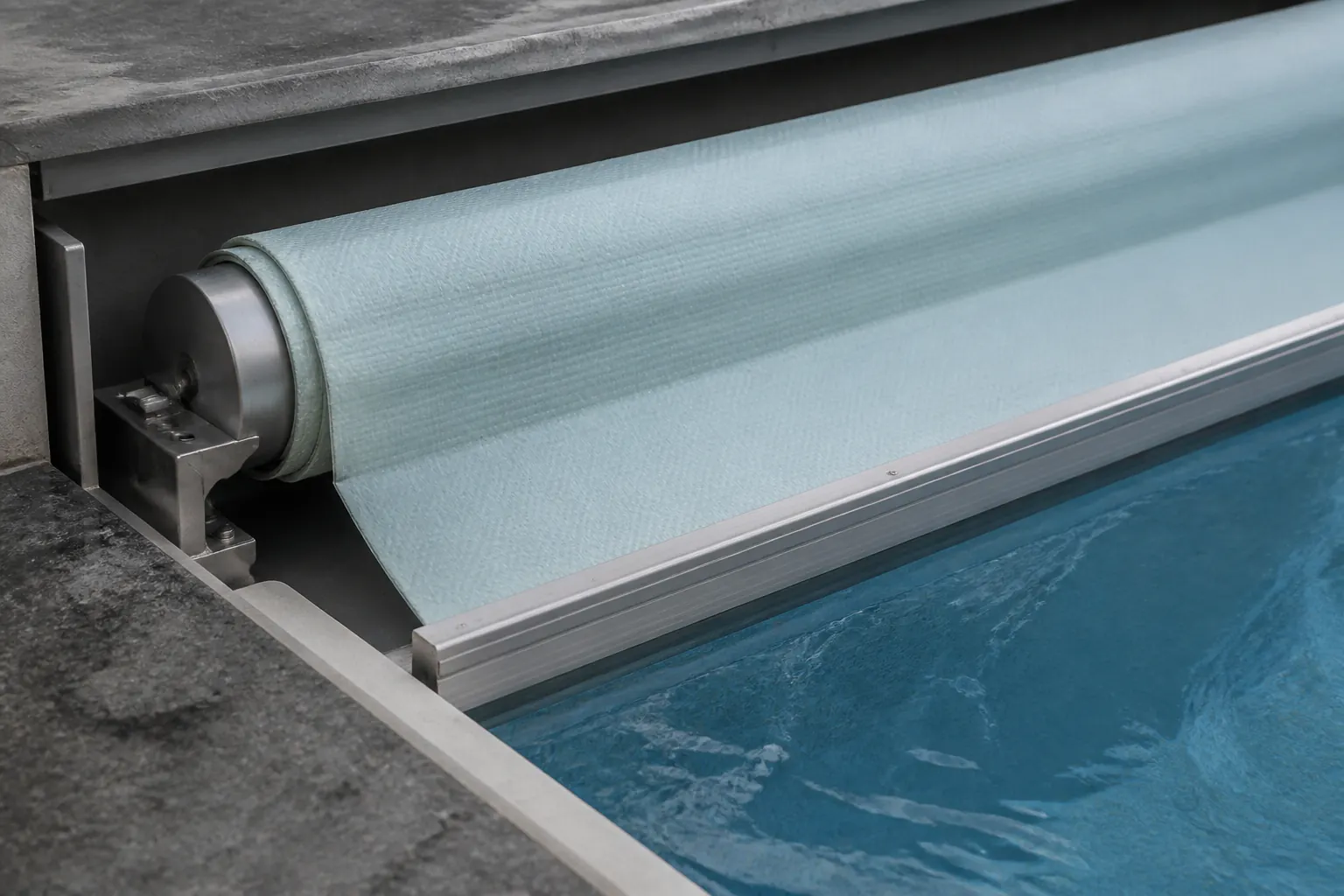
The fabric attaches to a leading-edge bar and to ropes or tapes running in tracks along both sides of the pool. A drive unit (electric motor or hydraulic power unit) turns a roller that winds the fabric in and out. The roller lives in a housing: a recessed pit at the end of the pool, a bench enclosure, or an above-deck casing.
A complete specification should address eight elements:
- Fabric: reinforced vinyl in solid or specialty variants;
- Tracks: undertrack (inside the pool wall), toptrack or deck-mounted;
- Drive mechanism: ropes, tapes or gear systems pulling the leading edge;
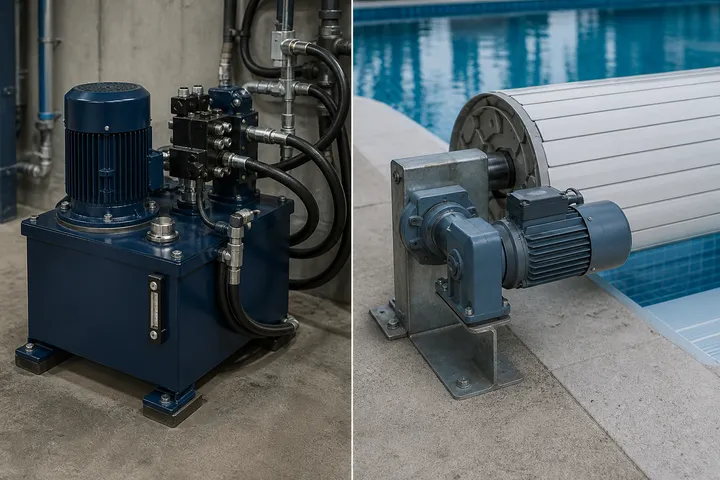
- Motor or hydraulic power unit: see hydraulic vs electric drives;
- Roller: sized to the pool width;
- Housing: recessed, bench or above-deck;
- Controls: key switch, keypad or integration with pool automation;
- Drainage: the cover pit and housing must drain, or the mechanism sits in water.
If a quotation is missing any of these, the scope is incomplete. The components page turns that list into a specification checklist.
Main configuration decisions
| Decision | Options | Driven by |
|---|---|---|
| Project type | New build vs retrofit | Whether recessed housings and wall channels can still be formed |
| Track type | Undertrack vs toptrack | Appearance, pool shape, new vs existing shell |
| Drive | Hydraulic vs electric | Pool size, duty cycle, motor location constraints |
| Housing | Recessed pit, bench, above-deck | Deck design, budget, retrofit limits |
| Controls | Key switch, keypad, automation | Safety policy and operating habits |
The two comparisons that shape everything else are undertrack vs toptrack systems and hydraulic vs electric drives. For existing pools, start with new pool vs retrofit cover planning.
Build a cover design record before requesting prices
A useful quotation starts with one agreed record of the pool and its interfaces. It does not need to be a finished construction set, but it should be specific enough that every bidder is pricing the same arrangement.
| Record | What to show |
|---|---|
| Pool geometry | Finished inside dimensions, corner radii, steps, ledges and any change in width |
| Track zone | Proposed track position, coping profile, deck finish and obstructions along both sides |
| Housing | Available length, width and depth, lid finish, access direction and removable items |
| Drainage | Pit outlet, discharge route and the party responsible for connecting it |
| Services | Available power, control location, conduit route and equipment-room distance |
| Operations | Who may operate the cover, where the pool can be observed and how access is controlled |
| Safety claim | Exact model, listed certification and documents supplied with that model |
Attach current drawings and photographs to the record. Mark dimensions as design, field verified or to be confirmed. That distinction prevents a supplier from treating an early drawing dimension as a final site measurement.
New pool vs existing pool
On a new build, put the housing pit, track channels, conduit runs and pit drainage on the drawings before concrete work. Existing pools often use toptrack or deck-mounted tracks with a bench or above-deck roller, subject to the manufacturer’s geometry and installation limits.
The cover also creates interfaces between several trades. The structural contractor forms the pit and any track recess. The deck contractor controls finished levels and removable lid details. The electrician provides power and control wiring. The cover installer supplies and aligns the moving system. State these boundaries in the scope, including who checks the opening before the deck or coping makes correction difficult.
Use two coordination hold points on a new build:
- Review the shell, pit, track and conduit dimensions before concrete is placed.
- Field-measure the finished opening before the cover fabric or other dimension-dependent parts are released.
The manufacturer’s installation documents control the required tolerances and measurement method. Do not substitute nominal plan dimensions for that check.
Energy and water performance
EPA WaterSense guidance identifies regular cover use as an effective way to reduce pool evaporation. Energy savings vary with climate, water temperature, operating hours and how consistently the cover is closed. See pool covers for hot climates for climate-specific planning.
Safety and operating limits
A cover marketed as a safety cover should identify its certification and applicable standard, such as ASTM F1346. The rating depends on correct sizing, installation and operation. Follow local barrier and alarm requirements, the manufacturer’s instructions and active supervision practices.
Specifying and measuring
Before requesting quotations, document the pool’s exact dimensions, deck construction, obstacles and power availability. Our automatic pool cover measurement sheet lists every dimension a supplier needs to price a system accurately, and the Automatic Pool Covers & Safety hub collects the full set of planning guides.
How to compare quotations
Compare the proposed configuration before comparing price. Each quotation should identify the track type, drive type, fabric, roller and housing arrangement, controls, included installation work, excluded builder work, lead time, warranty terms and commissioning documents. Ask the bidder to mark any deviation from the design record.
A lower price may simply omit the pit lid, drainage connection, electrical work, freight, field measurement or final adjustment. Put those items in separate rows in the comparison so an incomplete scope is visible. If a bidder proposes a different arrangement, request a drawing showing how it changes the deck, pit or service access.
Commissioning and handover
Commission the installed system against the manufacturer’s instructions. The handover record should identify the installed model and serial information, show the cover opening and closing through a complete cycle, confirm that the fabric and leading edge travel without obstruction, and document the controls and access policy. Inspect the housing after water is introduced to confirm that its drainage path works as designed.
Collect the operating manual, safety and certification information for the installed model, warranty, as-built wiring details and the procedure for routine inspection and service. Train the people who will actually control access to the pool. A safety rating does not correct poor operation, an obstructed track or a housing that cannot be serviced.
Frequently asked questions
Does an automatic pool cover work on any pool shape?
Track-guided automatic covers suit rectangular pools best. Freeform and infinity pools can be covered, but they usually need a deck-mounted track layout or a custom design, which affects cost and appearance.
Can an automatic cover be added to an existing pool?
Yes. Retrofit systems typically use toptrack or deck-mounted tracks and an above-deck or bench-housed roller, because recessed housings and undertrack channels are much easier to build into a new shell.
Is an automatic pool cover a safety cover?
Only if the specific model is certified to an applicable safety standard such as ASTM F1346 and is installed, sized and operated according to the manufacturer's instructions. Continue to follow all required barriers, alarms and supervision practices.
Sources
- ASTM F1346 Standard Performance Specification for Safety Covers for Swimming Pools, Spas and Hot Tubs — ASTM International Accessed August 23, 2026.
- WaterSense at Work, Commercial Pool and Spa Equipment — U.S. Environmental Protection Agency Accessed August 23, 2026.
- Pool Safely campaign resources — U.S. Consumer Product Safety Commission Accessed August 23, 2026.
- General Installation Overview — Cover-Pools Accessed August 23, 2026.