Direct answer
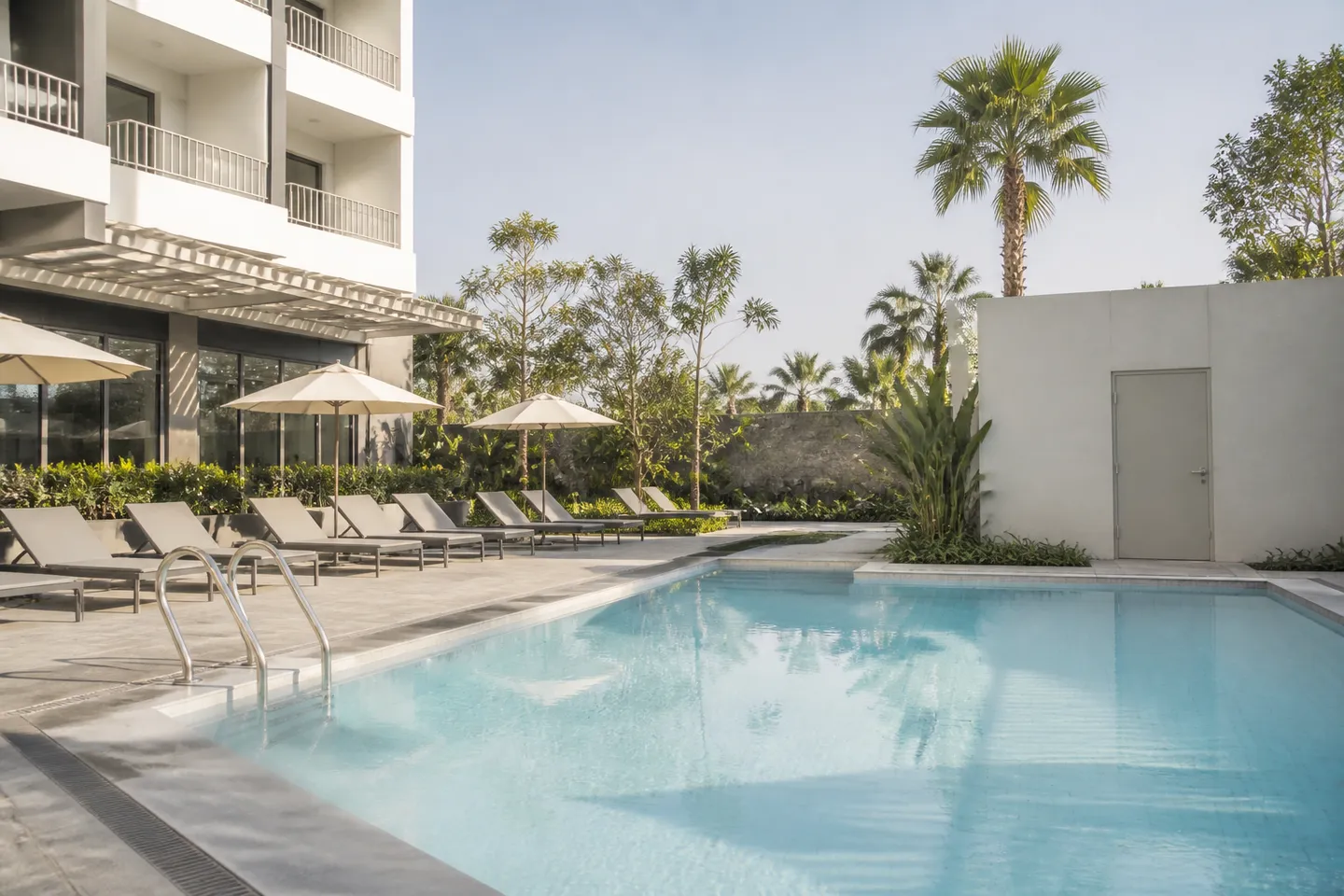
Hotel and resort pools are planned around uptime (code-mandated turnover rates, duty/standby equipment redundancy, monitored water chemistry, maintenance access that does not disturb guests, and complete handover documentation) because a closed pool is a visible service failure that reviews record permanently.
Key takeaways
- Commercial codes mandate faster turnover and continuous treatment; residential sizing habits do not transfer.
- Redundancy on pumps and dosing is cheaper than a single day of pool closure in season.
- Plan maintenance access, deliveries and chemical storage around guest sightlines and hours.
- Handover documentation (schedules, manuals, spares lists) decides whether year two runs as well as day one.
A residential pool that underperforms annoys a family. A hotel pool that closes appears in reviews within hours. That asymmetry drives every planning decision in hospitality pool projects: the system is designed around uptime, not around minimum first cost.
Codes set the floor
Commercial pools are governed by state and local public health codes. The CDC’s Model Aquatic Health Code is voluntary guidance that jurisdictions can adopt or adapt. Identify the rules that apply at the project location before setting turnover, treatment, monitoring or safety requirements.
Create a compliance register that names the jurisdiction, code edition or adopted requirements, reviewing authority and the person responsible for each submission. Keep design choices that exceed the minimum separate from mandatory requirements. This makes later value-engineering discussions safer because the team can see which items are operational choices and which cannot be removed.
Start with the operating profile
The design brief should describe how the property will use and staff the pool, not only its dimensions.
| Input | Why it matters |
|---|---|
| Pool type and depth zones | Code classification, supervision and turnover requirements may differ |
| Expected hours | Determines maintenance windows, staffing and alarm response |
| Seasonal occupancy | Informs operating plans and service access during peak periods |
| Water-temperature target | Affects heating, evaporation and cover planning |
| Plant staffing | Determines which alarms, controls and manual procedures are realistic |
| Chemical delivery route | Affects storage location, access control and separation from guest movement |
| Closure tolerance | Helps define redundancy, spare parts and recovery procedures |
Confirm these inputs with both the design team and the property operations team. A system that depends on a procedure the staff cannot perform at the required hour is not an operational design.
Redundancy is the business case
| System | Redundancy practice |
|---|---|
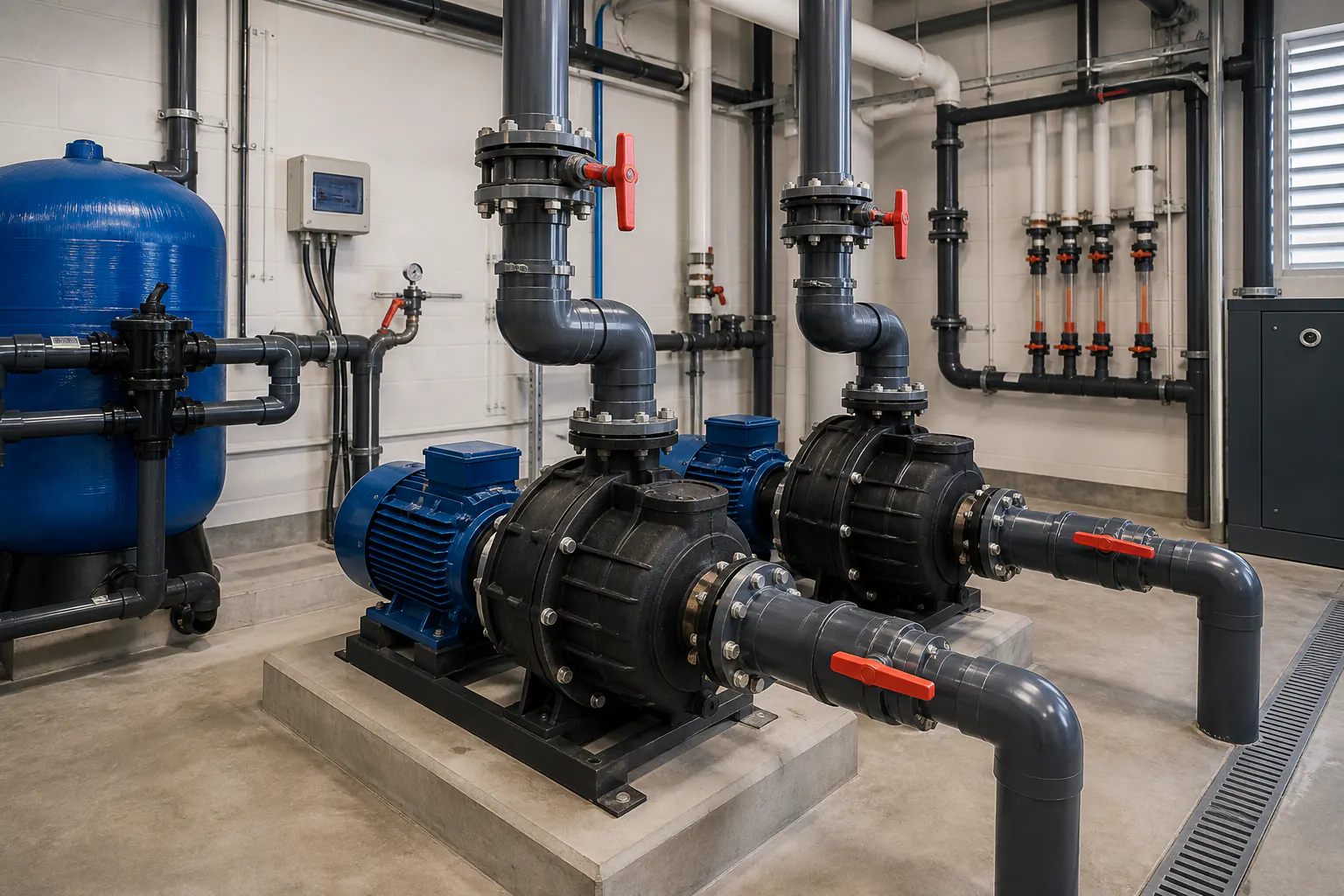
| Pumps | Duty/standby pairs on isolation valves, swappable without draining |
| Filtration | Multiple vessels so one can be serviced in operation |
| Dosing | Backup dosing capability and alarmed chemical monitoring |
| Heating | Staged units rather than one large unit |
| Controls | Alarms that reach staff, manual overrides documented |
Each duplicated component looks like cost until it is compared with a closed pool in season. Plant room space must be planned for this from the start; the sizing and access logic extends the residential guidance in pool equipment room design, and the underlying hydraulics follow the same system overview.
Redundancy also needs isolation, controls and a written changeover method. Two pumps do not provide useful standby capacity if a shared valve, power supply or inaccessible connection prevents one from being serviced. Show the isolation boundary on the hydraulic schematic and state whether changeover is automatic or performed by staff.
Not every item needs a complete duplicate. Use a failure review to decide where installed standby equipment, a stocked spare, a service contract or a documented temporary procedure is appropriate. Record the expected recovery path and the person who can authorize it.
Bather load changes the chemistry
Hotel pools can have sustained bather loads, sunscreen films and long operating hours. Account for the expected load when selecting filtration area, monitoring, dosing and any supplementary treatment permitted by the governing code.
Operations planned into the architecture
- Maintenance access that avoids guest areas: separate plant access, storage for equipment, delivery routes for chemicals;
- Chemical storage separated, ventilated and lockable, sized for realistic delivery intervals;
- Service windows: night hours for tasks that close the pool, with lighting and safe access to match;
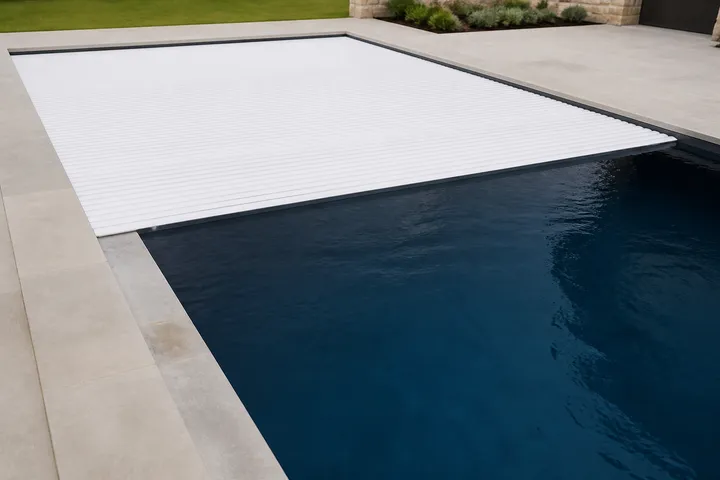
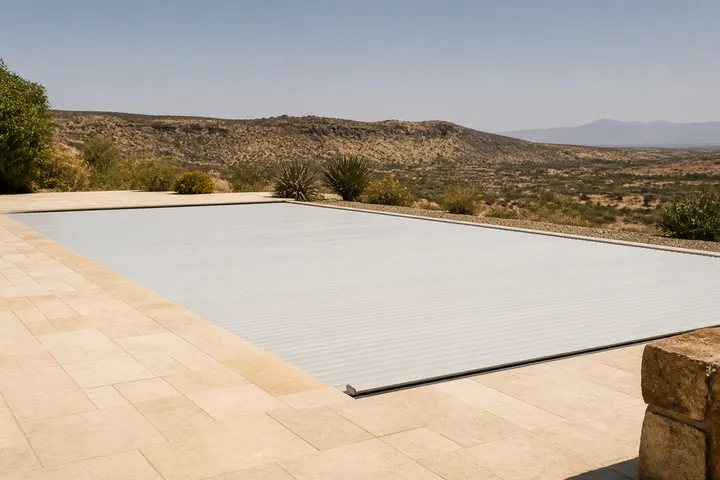
- Covers where closing hours exist; overnight covering cuts evaporation, heat loss and morning cleaning, with the strongest returns in hot regions (covers in hot climates covers the environment-specific specification).
Separate clean access from chemical and waste routes where the site allows it. Staff should be able to inspect equipment, read instruments and remove a pump or filter component without moving through occupied guest space. Provide enough working room for the actual service task, including the path used to bring replacement equipment in.
Controls should turn an alarm into a response. For each critical alarm, document who receives it during operating and overnight hours, what can be checked safely, when the pool must close and who can return it to service. Test notification and escalation during commissioning rather than assuming that a message sent by the controller reaches the right person.
Handover decides year two
Require, as a contract deliverable: the equipment schedule as built, hydraulic and electrical drawings, every manual and data sheet, commissioning records, the maintenance calendar and a recommended spare parts list. Structuring these requirements into supplier quotations from the start is exactly what the pool equipment RFQ guide is for, and the Commercial & Hospitality Pools hub collects the related guides.
Acceptance should include operations
Run the pool through normal filtration, heating and any cleaning, feature or reduced-hours modes. Record normal readings in clean conditions and verify alarm notification, equipment changeover and safe shutdown procedures. Confirm that labels on valves, panels and chemical lines match the as-built drawings.
Train the staff who will operate the facility, then have them perform the routine tasks using the supplied procedures. The acceptance list should include water-quality records required by the governing authority, maintenance frequencies, consumables, spare parts on site, service contacts and the process for recording a correction. Handover is complete when the property can operate and respond to faults using the delivered information, not when the equipment first turns on.
Frequently asked questions
What turnover rate does a hotel pool need?
The rate is set by the applicable code and pool type; swimming pools, children's pools and spas each have different requirements, with shallow high-bather-load pools needing the fastest turnover. Confirm the governing code before sizing anything.
Do hotel pools in hot regions need covers?
Outdoor resort pools often stay uncovered for guest access. Where the pool has defined closing hours, a cover can reduce overnight evaporation, heat loss and debris. Actual payback depends on climate, utility prices and how consistently staff use it.
Sources
- Model Aquatic Health Code — U.S. Centers for Disease Control and Prevention Accessed August 23, 2026.
- Pool Safely campaign resources — U.S. Consumer Product Safety Commission Accessed August 23, 2026.