Key takeaways
- Evaporation acts at the same vertical depth rate in the bucket and the pool when water temperature and surface airflow match, so the test compares two simultaneous marks rather than a generic daily evaporation figure.
- A bucket test is invalid after 24 hours or whenever rain, swimmer splash-out, or an active auto-fill or manual fill valve alters the water level during the window.
- Published procedures differ on pump state: some run normal circulation for 24 hours, some shut equipment off for 24 hours, and some compare one 24-hour Pump ON run against one 24-hour Pump OFF run. Always write the pump state beside the reading.
- Comparing Pump ON and Pump OFF water loss suggests whether to suspect pressure-side returns, suction lines, or the shell and fittings, but it does not pinpoint an underground break.
Judging water loss from a rule-of-thumb daily drop - or from a bucket test where an automatic water leveler topped up the pool overnight - can waste money on a false leak call or leave a costly leak running. To read pool bucket test results accurately, compare the 24-hour drop on the outside pool mark against the 24-hour drop on the inside bucket mark in the same measurement units, and accept the reading only when auto-fill, rain, swimmer splash-out, and elapsed time stayed within bounds.
This page provides a single record for both water-level changes, the validity checks that govern whether to repeat the run or schedule leak detection, and the scope limits of a Pump ON versus Pump OFF comparison. If water loss is part of a broader structural or surface project, pair this log with the pool renovation planning guide.
Why the bucket test compares two marks instead of a fixed daily inch number
Prestige Pools and Spas notes that swimming pool evaporation shifts from week to week and from pool to pool with wind, water temperature, dew point, barometric pressure, and splash-out. Because those variables change overnight, a fixed daily drop number copied from another climate or season cannot separate evaporation from a leak.
The bucket test places a sample of pool water in the same microclimate as the pool itself:
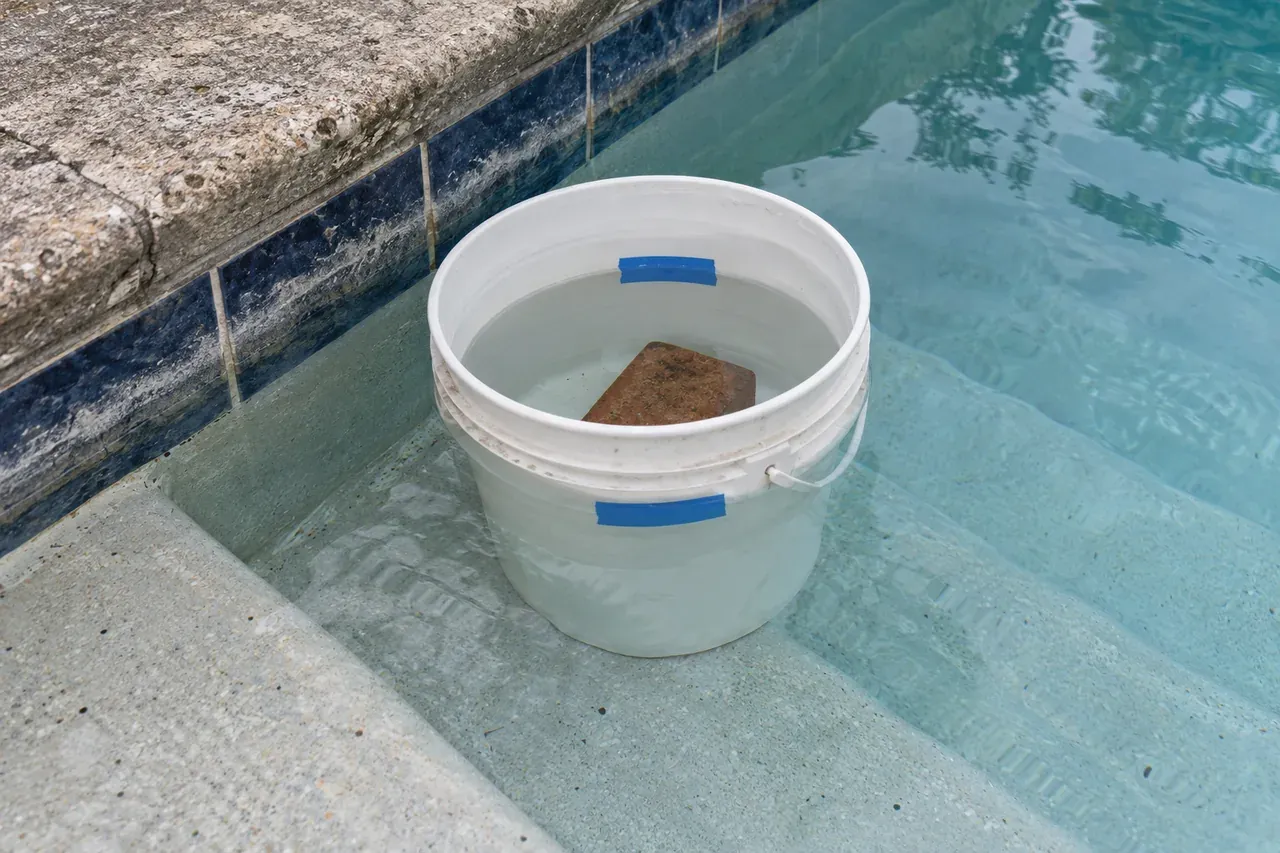
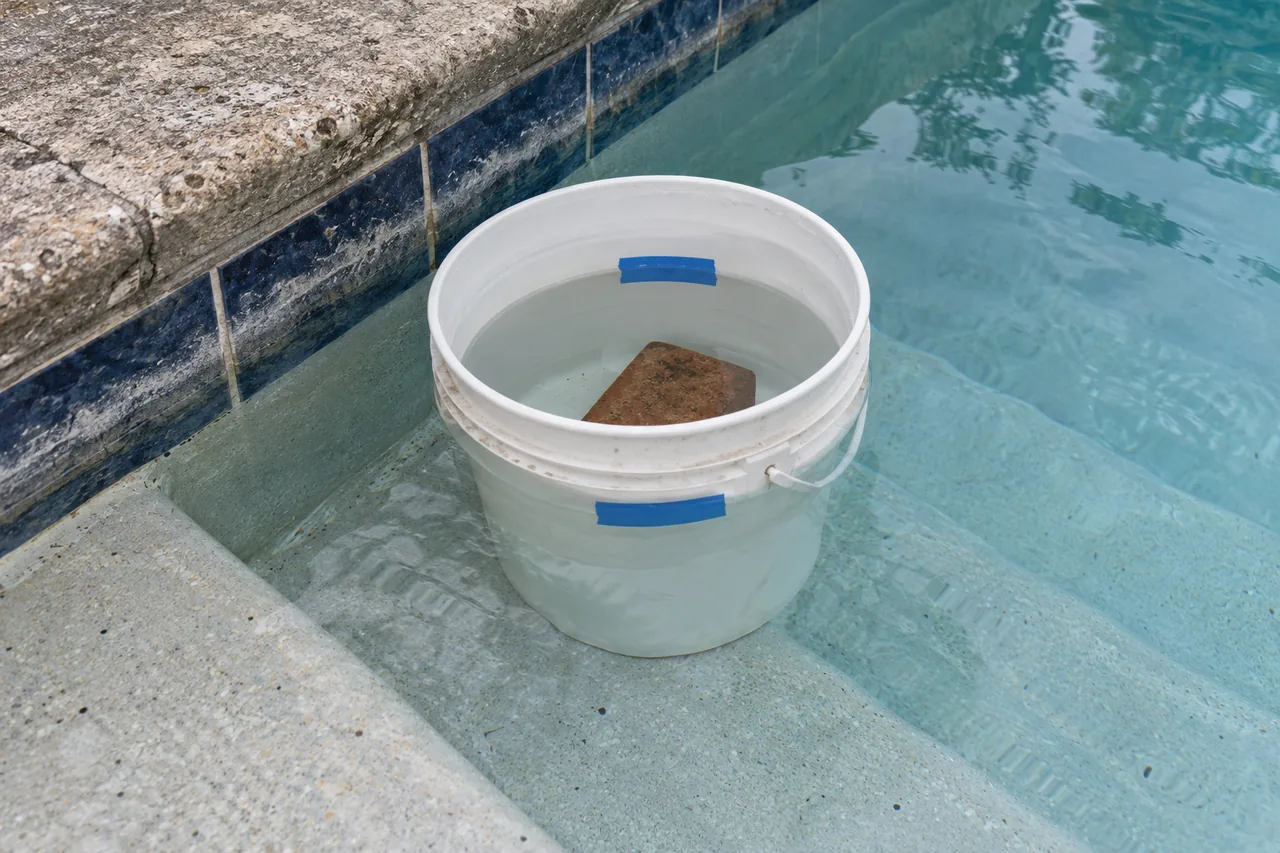
- Matching water temperature: Both A & D Leak Detection and Prestige Pools and Spas place a 5-gallon bucket on the first or second step of the pool. Prestige notes that setting the bucket in the pool water keeps the water temperature inside the bucket close to the pool’s water temperature, using a brick or stones inside the bucket if needed so it cannot float away.
- Matching surface airflow: Prestige specifies filling the bucket with pool water to approximately 1 inch from the top rim (A & D specifies 1 to 2 inches from the top) so air movement across the water surface inside the bucket resembles air movement across the open pool.
- Equal vertical evaporation depth: As A & D Leak Detection states, evaporation occurs equally in vertical depth regardless of surface area - for example, a bucket loses a quarter-inch of water to evaporation at the same rate a swimming pool loses a quarter-inch. That 1/4-inch figure in A & D’s sheet illustrates equal depth loss between the two containers; it is not a universal daily evaporation cap for every day of the year.
Check test validity before you interpret the two marks
A level difference after 24 hours is only meaningful if neither water surface was artificially refilled, diluted, or agitated outside the test rules. Check these conditions before treating a row as a result:
Scroll horizontally to see all columns when the table extends beyond the screen.
Record the pump and equipment state instead of assuming one universal rule
Published bucket-test instructions do not use the same circulation setting. Treating them as identical can cause two people reading the same pool to log incompatible numbers:
- Normal circulation resumed after marking (A & D Leak Detection): Bring the pool to normal level, fill the 5-gallon bucket to 1-2 inches from the top on the first or second step, mark the inside water level with a marker or electrical tape, shut off the pump to mark the calm pool level on the outside of the bucket, and then resume normal pump operation for the 24-hour window with the auto/manual fill valve off.
- As-operated 24-hour run, followed by optional Pump ON / Pump OFF comparison (Prestige Pools and Spas): Mark the inside and outside levels (blue painter’s tape works well) and operate the pool for 24 hours exactly as it was being operated when the leak was first suspected. Prestige then outlines a second step comparing a 24-hour run with the pump on against a 24-hour run with the pump off.
- Equipment shut off for the full 24 hours (Master Touch Outdoor Living): Turn off the pool pump, heater, and other pool equipment before filling the bucket to match the pool’s water level, mark both levels with waterproof tape or a marker, and leave the pump off and the pool unused for the full 24 hours.
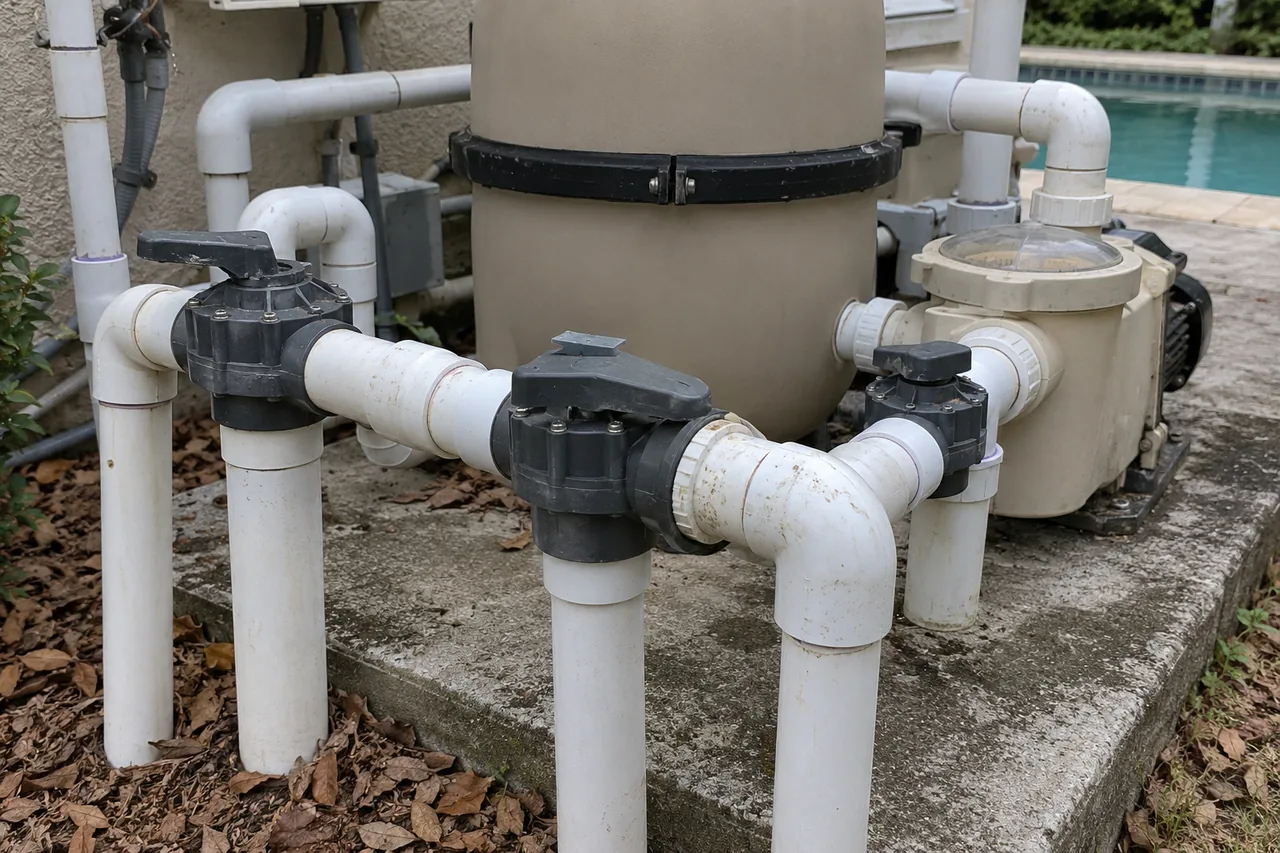
Do not merge these three documents into a single unlabelled test. Instead, record the exact pump and valve state for the 24-hour window you ran, and shut the pump off briefly when applying or reading the outside mark so surface turbulence does not blur the waterline. See the pool equipment system overview for how skimmers, main drains, pumps, filters, and returns connect across the circulation loop.
Decision branches: repeat the test, log evaporation, or move to a leak check
Once a 24-hour run finishes, use the validity checks and the two level changes (measured in the same unit, such as inches or millimeters from the bottom edge of each tape strip) to choose the next step:
Scroll horizontally to see all columns when the table extends beyond the screen.
If your equipment-pad walkthrough shows a filter pressure issue alongside water loss, keep those two checks separate: record clean and running gauge readings in the filter pressure baseline log rather than treating gauge pressure as a water-loss measurement.
How to record a Pump ON versus Pump OFF comparison without overclaiming
Prestige Pools and Spas describes comparing a 24-hour bucket test with the pump running against a subsequent 24-hour bucket test with the pump off. Because the inside bucket evaporation can differ between Day 1 and Day 2 if wind or humidity shifts, compare the net pool loss beyond evaporation (outside pool drop minus inside bucket drop, in the same units) from each valid 24-hour run:
Scroll horizontally to see all columns when the table extends beyond the screen.
Operational and safety limits on multi-mode testing
Before shutting a circulation pump off for a 24-hour static comparison, check whether the site and water conditions allow it:
- Commercial and public pools: Never shut off required filtration and disinfection circulation on a hotel, resort, apartment, or public pool while the facility is open to bathers. Any static test on a regulated commercial vessel must be scheduled and approved by the qualified operator and leak specialist within local health-code rules.For commercial plant redundancy planning, see hotel and resort pool planning.
- Water quality, weather, and freeze protection: In hot weather, heavy debris loads, or freezing conditions, shutting circulation off for 24 hours can degrade water clarity, trip chemical balance, or expose pad piping to freeze damage. Run a static 24-hour comparison only when ambient conditions, sanitizer levels, and equipment manuals permit a 24-hour shutdown.
Copy this pool bucket test results record
Fill in only what you measure on site. Keep inside and outside changes in the same unit (for example, sixteenths of an inch or millimeters), and leave any unmeasured field blank (Unknown / verify on the unit).
When a valid test confirms water loss beyond evaporation during pre-renovation scoping, carry the completed row directly into the condition-assessment survey table in the pool renovation planning guide and the Pool Renovation & Retrofit hub so concealed plumbing or shell checks are priced before new finishes are specified.
Frequently asked questions
What do pool bucket test results mean after 24 hours?
If the test conditions remained valid for 24 hours and both marks dropped by the same vertical distance, the water loss matches evaporation under those weather conditions. If the outside pool mark dropped further than the inside bucket mark, the pool lost water beyond evaporation, which points to a leak check.
What makes a pool bucket test invalid or inconclusive?
Rain during the test window, an active automatic or manual fill valve, swimmer splash-out, a floating or tipped bucket, or reading the marks after the 24-hour window all make the comparison inconclusive. Reset the pool and bucket levels and repeat on a calm, rain-free day.
Should the pool pump be on or off during a bucket test?
Published field procedures use both modes for different purposes. A & D Leak Detection shuts the pump off briefly to mark the outside level and resumes normal pump operation for 24 hours; Master Touch Outdoor Living shuts the pump and heater off for the full 24 hours; Prestige Pools and Spas runs 24 hours under normal operation and compares a 24-hour Pump ON test with a 24-hour Pump OFF test. Record whichever mode you ran.
Does a Pump ON versus Pump OFF bucket test prove which pipe is leaking?
No. Prestige Pools and Spas notes that higher loss with the pump on points toward the pressure side (return line), higher loss with the pump off points toward the suction side (skimmer or main drain), and equal loss in both modes points toward the shell, liner, or fittings. Treat that comparison as an initial clue for professional testing, not a confirmed excavation point.
Sources
- Bucket Test — A & D Leak Detection Accessed October 17, 2026.
- Got A Leak? ARE YOU SURE? Try the Swimming Pool Leak Bucket Test — Prestige Pools and Spas Accessed October 17, 2026.
- How to Do a Bucket Test for Pool Leaks — Master Touch Outdoor Living Accessed October 17, 2026.