Direct answer
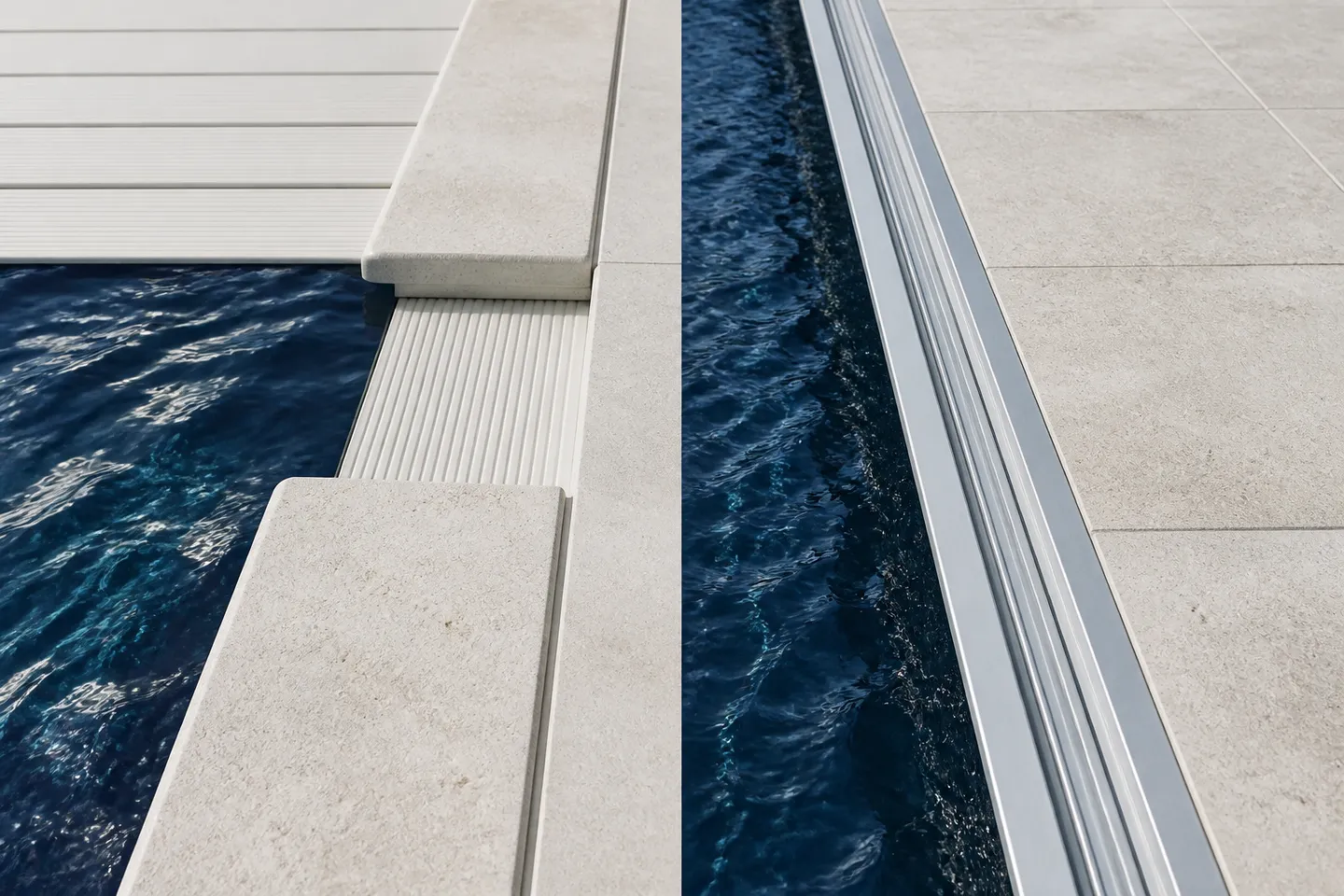
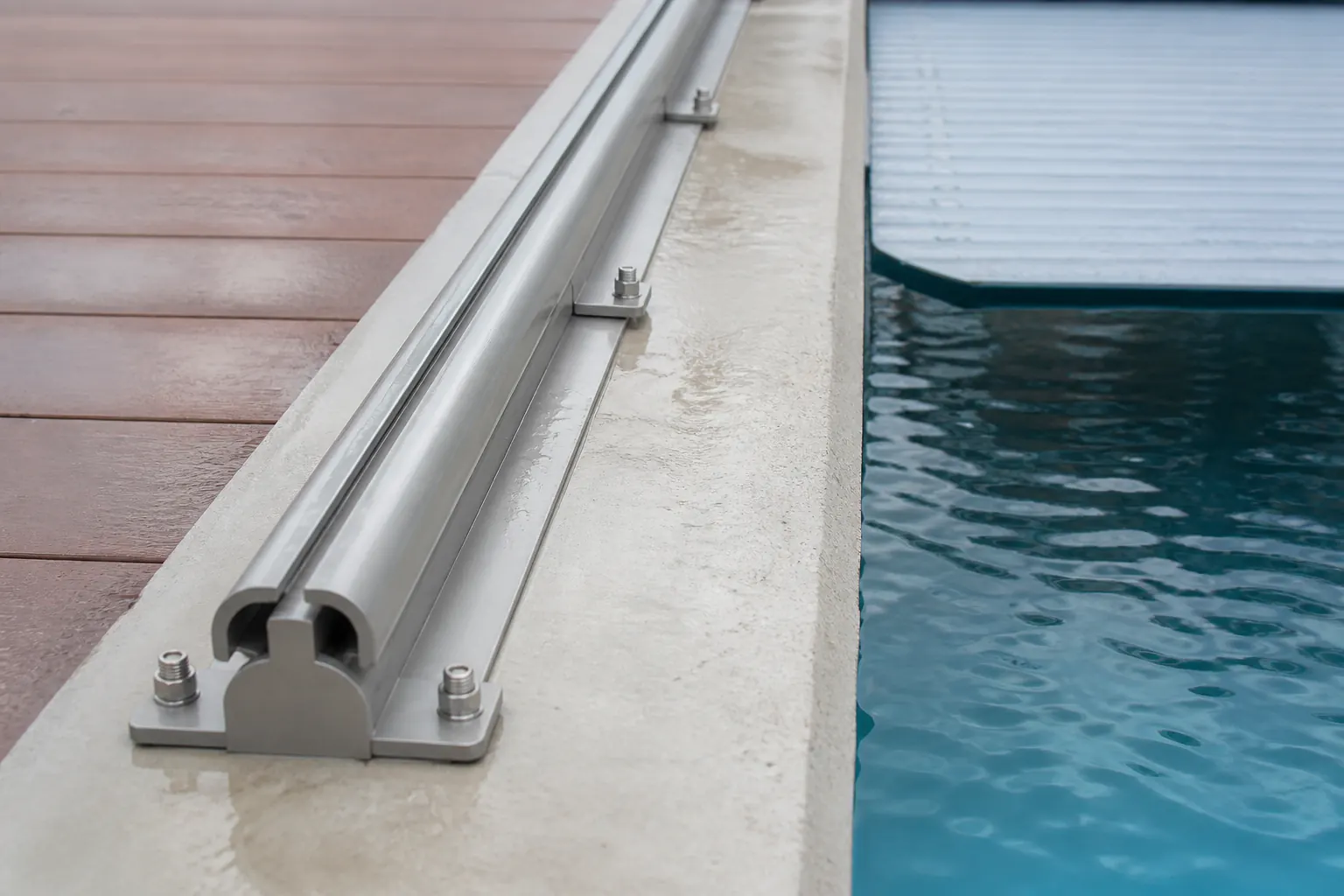
Undertrack systems recess the tracks below the coping and are normally coordinated with a new shell. Toptrack and deck-mounted systems place visible tracks on the deck or coping, making them the more practical option for many retrofits.
Key takeaways
- Undertrack is a new-construction decision; it is rarely practical to cut into an existing shell.
- Toptrack and deck-mounted tracks are the standard retrofit route and the cheaper option on new builds.
- Undertrack requires the pool walls to be parallel and dimensionally accurate along the full length.
- Track choice constrains housing position, leading-edge design and how the deck is finished.
Automatic cover tracks guide the ropes or tapes that move the leading edge. Their position also changes the coping and deck detail. Undertrack and toptrack systems can provide the same covering function, but they suit different construction stages and finished appearances.
Typical project fit
Undertrack is normally coordinated with a new shell because the channel sits below the coping. Toptrack or deck-mounted systems can be installed on an existing deck, so they are the usual starting point for retrofit planning. A new pool can use either arrangement.
Compact comparison
| Factor | Undertrack | Toptrack / deck-mounted |
|---|---|---|
| Track visibility | Hidden below coping | Visible on deck or coping |
| New build | Yes; formed into the shell | Yes |
| Retrofit to existing pool | Rarely practical | Standard approach |
| Wall requirements | Parallel, dimensionally accurate walls | More tolerant |
| Relative cost | Higher | Lower |
| Trip/step considerations | None at deck level | Track profile on deck surface |
Construction differences
An undertrack channel is formed into the pool wall just below the coping during shell construction. That demands early coordination: the walls must meet the cover manufacturer’s dimensional tolerances, the housing pit must align with the channels, and the coping detail must conceal the track without pinching the fabric. Put these requirements on the drawings before concrete work. The coordination steps are covered in the new pool planning checklist.
Toptrack systems fix to the deck or coping surface. They avoid forming a channel inside the shell. On an out-of-parallel pool, the supplier may propose parallel deck tracks even where the water line does not follow them. The measured layout and product limits decide whether that approach is available.
Measure the water and the track corridor
Record the width at several points, both diagonals, the coping profile and every object near the proposed track line. For toptrack, include deck joints, drains, changes in level and the material that will receive the fixings. For undertrack, show the structural channel, coping support and finished clearance around the fabric.
Use the measurement sheet for the field record. Mark which dimensions came from design drawings and which were verified on site. The installing supplier should confirm the measurement method used for parts that depend on the finished opening.
Retrofit reality
For an existing pool, an undertrack proposal would affect the top of the shell and coping. Most retrofit studies therefore begin with a toptrack or deck-mounted arrangement and a bench or above-deck roller housing. The full survey and housing scope is in new pool vs retrofit cover planning.
Questions to settle on the drawings
| Question | Undertrack review | Toptrack review |
|---|---|---|
| Where is the track fixed? | Structural channel below coping | Finished deck or coping surface |
| What remains visible? | Coping and leading edge detail | Track profile, fixings and leading edge |
| What must stay accessible? | Inner guide, pit and end details | Track length, fixings and roller housing |
| What can delay the order? | Shell dimensions and coping detail | Final deck survey and fixing condition |
Review the exact profile drawing rather than choosing from the words “hidden” or “surface mounted.” Small differences in the track and lid detail can change the finished deck.
What to ask a supplier
Ask for the track profile drawings, required wall or deck tolerances, coping details for concealment (undertrack) or fixing details (toptrack), and the related roller-housing detail. Cross-check drive selection in hydraulic vs electric drives. The complete automatic pool cover guide puts both decisions in system context.
Before the track is fixed, mark its full route and confirm the roller alignment. At handover, keep the profile drawing and fixing information with the cover manual. Future deck or coping work needs those records so it does not block or damage the track.
Frequently asked questions
Is undertrack worth the extra cost?
On a new architectural pool where the owner wants no visible hardware, usually yes. On a budget-driven or retrofit project, toptrack delivers the same covering function for less money and less construction risk.
Can toptrack systems be safety rated?
Yes. Safety rating depends on the specific model meeting a standard such as ASTM F1346 when properly sized and installed, not on whether the tracks are recessed or surface mounted.
Sources
- ASTM F1346 Standard Performance Specification for Safety Covers — ASTM International Accessed August 23, 2026.
- General Installation Overview — Cover-Pools Accessed August 23, 2026.